If your building is taller than six stories, New York City requires a licensed professional to examine its facade up close once every five years and file the results with the Department of Buildings. The program is officially the Facade Inspection & Safety Program (FISP). Most people still call it Local Law 11. Cycle 10 started on February 21, 2025.
As of late September 2026, the first group of buildings has about five months left to file. The second group's window is already open, and the third opens in February. Most owners we talk to know roughly when their deadline is. Far fewer know what has to happen before it, and that gap is where buildings lose money.
Which sub-cycle your building is in
Cycle 10 is split into three filing windows, and the last digit of your tax block number decides which one you're in. The block number is on your property tax bill. You can also find it by searching your address in DOB NOW or the city's property records.
| Sub-cycle | Tax block ends in | Window opens | Report due by |
|---|---|---|---|
| 10A | 4, 5, 6 or 9 | February 21, 2025 | February 21, 2027 |
| 10B | 0, 7 or 8 | February 21, 2026 | February 21, 2028 |
| 10C | 1, 2 or 3 | February 21, 2027 | February 21, 2029 |
The cycle as a whole ends February 21, 2030. Missing your window doesn't slide you into a later one. It just starts the penalties.
Did the new facade law push these dates back?
No. In 2025 the City Council passed Intro 394-A, which lets DOB stretch the time between facade inspections to anywhere from 6 to 12 years. It takes effect October 1, 2026, and some owners have read that as a reason to wait.
It isn't one. DOB's review of the program, done with the engineering firm Thornton Tomasetti and released in November 2025, recommends a six-year cycle along with new inspection options, and DOB has said it expects those changes to apply starting with the cycle that begins in 2030. Nothing published so far moves a Cycle 10 deadline. We'd plan around the dates in the table until DOB says otherwise in writing.
What the filing involves
The filing is a report of critical examination, and only a Qualified Exterior Wall Inspector (QEWI) can prepare and sign it. A QEWI is a New York-licensed architect or engineer who meets DOB's experience requirements. Your managing agent can't file it, and neither can your contractor.
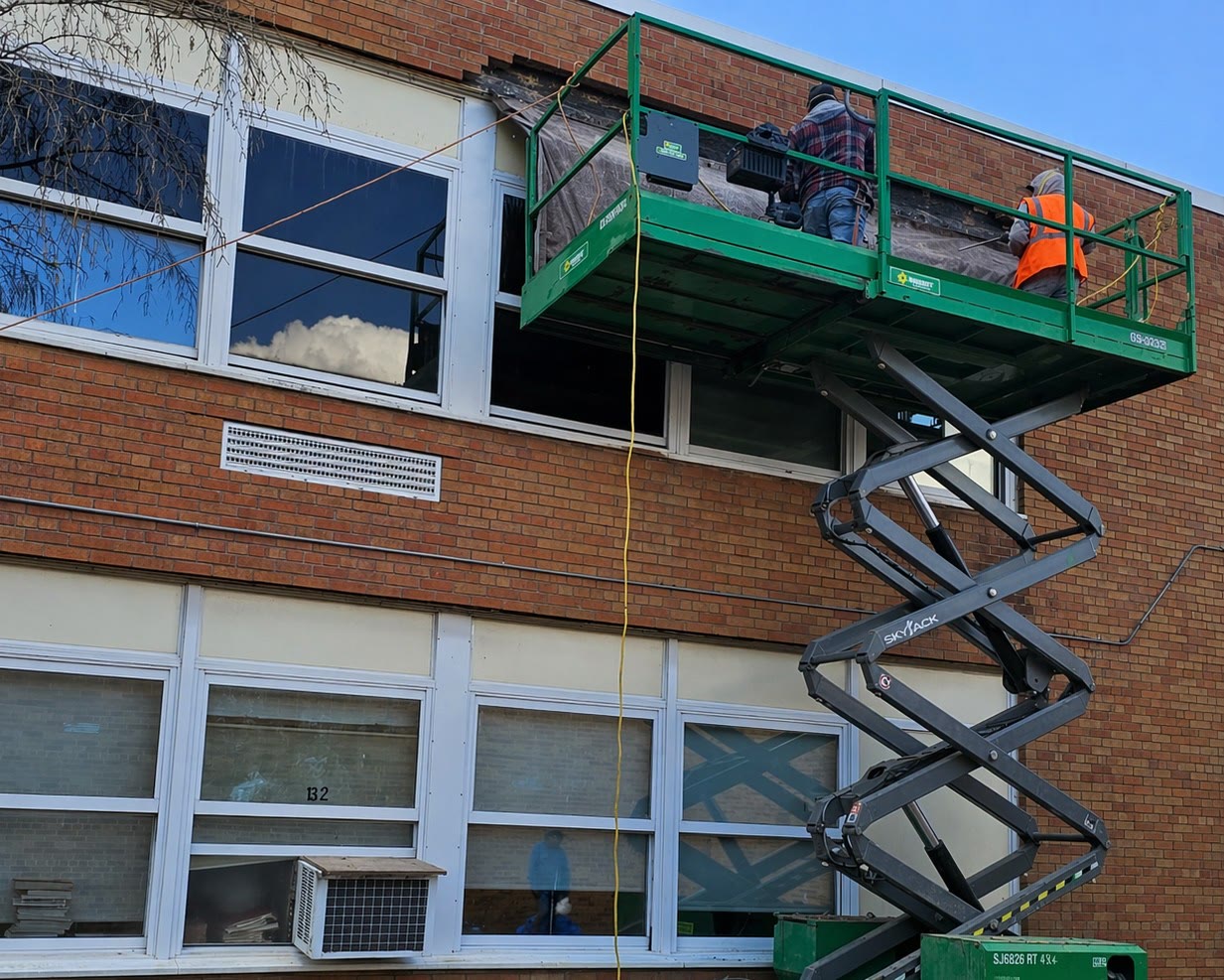
The QEWI surveys every facade visually, then does a close-up, hands-on examination from a scaffold, swing stage or rope drop. On facades that face a street or sidewalk, those close-up drops have to be spaced no more than 60 feet apart and run the full height of the building. Drone photos are allowed in the report as a supplement. They don't replace the drops. Balconies and railings are examined as part of the same report, and if your building has cavity wall construction, DOB requires investigative probes at least every other cycle, so check whether your Cycle 9 report included them.
Once the close-up work is finished, the report has to be filed in DOB NOW: Safety within 60 days. The filing fee is $425. The QEWI classifies the building as Safe, SWARMP (Safe With A Repair and Maintenance Program), or Unsafe. We wrote a separate post on what a SWARMP result obligates you to do, since it's the most common outcome and the most misread.
The rule that catches Cycle 9 SWARMP buildings
If your building got a SWARMP report in Cycle 9 and the repairs never happened, read this part twice.
A condition that was SWARMP last cycle and is still there when the QEWI comes back has to be filed as Unsafe in Cycle 10. There's no grace period and no judgment call for the inspector. The building also picks up a $2,000 civil penalty for the uncorrected SWARMP condition.
An Unsafe filing changes the whole project. Public protection goes up right away, which usually means a sidewalk shed, and the conditions have to be repaired within 90 days of filing unless DOB grants an extension (the request fee is $305). Then the 2025 shed laws apply. From the shed permit date you have 5 months to file construction documents, 8 months to file for the work permit, and 2 years to finish the repair. Each missed milestone carries a penalty of $5,000 to $20,000, and shed permits for facade work now last only 3 months before renewal. Our sidewalk shed guide walks through those milestones.
So if you have open SWARMP items from Cycle 9, get them repaired before your QEWI does the Cycle 10 close-up. Work finished ahead of the inspection goes into the report as corrected. The same brick and mortar installed after an Unsafe filing costs about the same, but now it comes with a shed, a 90-day clock and a penalty schedule.
What non-compliance costs
Penalties are set by DOB rule 1 RCNY 103-04. Filing late costs $1,000 for every month the report is overdue. Not filing at all adds $5,000 a year on top of that. Failing to correct Unsafe conditions starts at $1,000 a month, and in later years DOB adds charges per linear foot of sidewalk shed. The uncorrected SWARMP penalty mentioned above is $2,000.
None of that money goes toward the building. And all of it is public: filing status, violations and penalties show up on DOB NOW, where lenders and prospective buyers look.
What to do now, by sub-cycle
10A (block ends in 4, 5, 6 or 9): due February 21, 2027
If you haven't hired a QEWI yet, do it this week. Five months sounds like plenty until you count backward. The close-up drops need rigging, sometimes an access agreement with the building next door, and dry, calm weather. Rope access and swing stage work get called off on windy winter days, and QEWI firms are at their busiest right now because every 10A building is in the same spot. With the 60-day filing rule and time for the report to be written and reviewed, you want the inspection itself finished by early December.
If you know you have open Cycle 9 SWARMP items, call a contractor now too. Mortar needs temperatures above roughly 40°F to cure properly, so October and November are the last good months for exterior masonry this year. Smaller repairs can often fit in that window and stay off an Unsafe filing. Larger ones probably won't, and it's better to learn that in September than from the report in February.
A late filing is recoverable, but it costs money for nothing. Five months late is $5,000 in late penalties before the annual failure-to-file charge is added.
10B (block ends in 0, 7 or 8): due February 21, 2028
Your window is open and you have the most room of the three groups. Use it by inspecting early. A close-up done in the next six to nine months leaves you a year or more to design the repairs, get board approval, and schedule the masonry in warm weather instead of racing a winter deadline. You'll also be booking a QEWI before the 10C buildings start competing for the same inspectors.
If your building ended Cycle 9 with No Report Filed status, you can file Cycle 10 early to stop those penalties from growing. DOB opened early filing for 10B and 10C on December 15, 2025, for buildings filing as Safe or SWARMP. The catch is that accrued penalties must be paid within 10 business days of provisional acceptance. Miss that and the report is treated as incomplete, and the penalties keep running.
10C (block ends in 1, 2 or 3): due February 21, 2029
Your window opens in five months. The prep work can start today. Pull your Cycle 9 report and read the SWARMP list, including the month and year the inspector projected each condition would become Unsafe. For a building inspected in 2022 or 2023, some of those dates may already have passed.
Every item you repair before the Cycle 10 inspection is one less item on the report. Get a scope and budget number in front of the board this fall, so the work goes into next year's budget instead of an emergency assessment later.
The parapet check you also owe every year
Separate from the five-year cycle, Local Law 126 of 2021 requires an annual observation of parapets that face a street or sidewalk. It took effect in 2024. The report isn't filed with DOB, but you have to keep it for six years and produce it if DOB asks, and penalties for skipping it run from $1,250 to $10,000. If you haven't done a 2026 parapet observation, ask your QEWI to cover it during the FISP visit. See our Local Law 11 page for how the two programs overlap.
Where we come in
NYC Superior doesn't write FISP reports. We're the contractor that does the repairs a QEWI's report calls for: repointing, brick and lintel replacement, parapet rebuilds, and the rest of the masonry restoration scope. We think that's the right split. The engineer who classifies your facade shouldn't also be selling you the fix.
Send us your Cycle 9 report with its open SWARMP items, or a Cycle 10 report that just came back. We'll read it and come back with a realistic scope and budget range, free and with no obligation to bid.
Frequently asked questions
When is my FISP Cycle 10 deadline?
It depends on the last digit of your tax block number. Blocks ending in 4, 5, 6 or 9 file by February 21, 2027. Blocks ending in 0, 7 or 8 file by February 21, 2028. Blocks ending in 1, 2 or 3 file by February 21, 2029.
Does the new law allowing longer FISP cycles change my Cycle 10 deadline?
No. Intro 394-A lets DOB set intervals of 6 to 12 years, but DOB's proposed changes are aimed at the cycle that begins in 2030. The Cycle 10 windows haven't moved.
What happens if our Cycle 9 SWARMP conditions were never repaired?
They must be filed as Unsafe in Cycle 10, and the building faces a $2,000 penalty. Unsafe means immediate public protection and repair within 90 days.
Can a drone inspection replace the close-up inspection?
No. Drone images can be included in the report, but the hands-on examination at intervals of no more than 60 feet is still required on facades facing a street or sidewalk.
What are the penalties for filing late?
$1,000 per month late, plus $5,000 per year for failure to file. Uncorrected Unsafe conditions start at $1,000 per month and increase over time.
This article is general information about New York City building regulations, not legal or engineering advice. Requirements, fees and penalty amounts change, so confirm current rules with the NYC Department of Buildings or your QEWI. Last reviewed: September 22, 2026.