
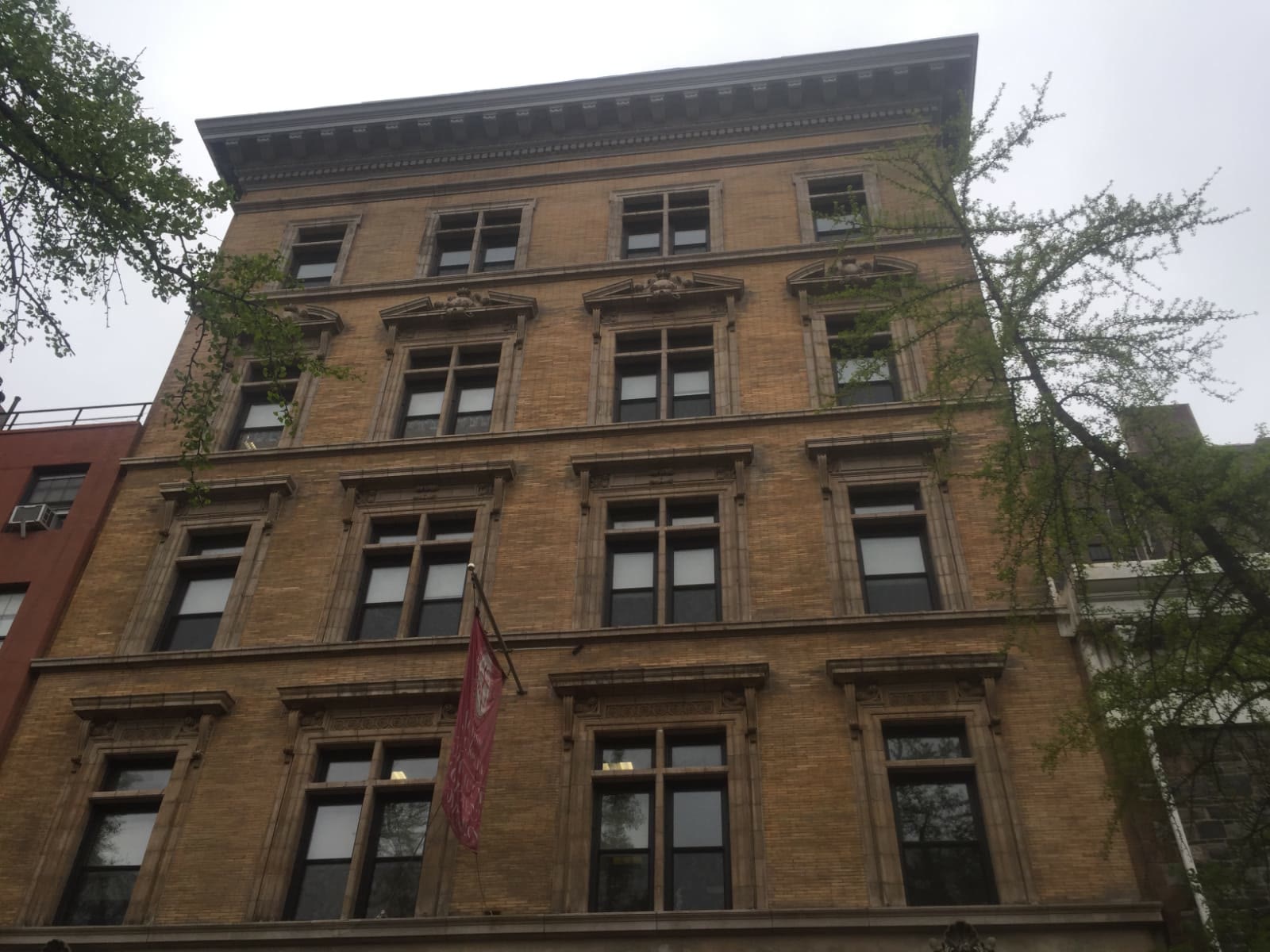
More than 37,900 buildings and sites in New York City are protected by the Landmarks Preservation Commission. Most of them aren't famous. They're row houses, walk-ups and prewar co-ops that happen to sit inside one of the city's 156 historic districts and extensions. If you own one, every facade repair job has an extra agency in front of it.
Boards tend to hear "landmarks" and picture a year of public hearings. For ordinary repair work that's rarely how it goes. Most masonry repairs, including the work a Local Law 11 report calls for, can be approved by LPC staff without a hearing. What decides whether that takes six weeks or six months is mostly how the application is put together.
First, confirm what you're dealing with
Your building can be an individual landmark or sit inside a historic district. Either way, exterior work is regulated. Being in a district doesn't mean your building needs to be special. A plain 1950s building inside a historic district still needs LPC permits for facade work, although staff will usually be more flexible about it than about the 1880s brownstone next door.
You can check your address on LPC's online landmarks map or on the city's ZoLa zoning map. Then pull the designation report for your building or district from LPC's website. It describes what the Commission considers significant about the building, and it's the first thing an LPC preservationist will read when your application comes in.
What needs a permit and what doesn't
LPC's published guidance draws the line at routine maintenance. You don't need a permit to reset coping stones, caulk masonry or metal joints, repair or replace flashing, replace a flat roof, or repaint something the same color it's been since designation.
You do need a permit to repoint, repair or resurface masonry, replace brick, stone or wood, clean the facade, strip paint, or paint masonry a new color. That covers nearly everything on a typical Local Law 11 repair list.
There's one important exception for emergencies. When a loose or broken piece of the facade poses an immediate threat, it can generally be taken down without waiting for a permit. Keep any historic pieces you remove, store them on site, and tell LPC staff what happened. Those pieces are often the best evidence you'll have for making replacements that match.
The permit types
LPC issues three main kinds of permits for exterior work. A Certificate of No Effect and a Permit for Minor Work are both issued by staff, without a hearing. Which one you get depends on whether the work needs a DOB permit and how it affects the building's protected features. A Certificate of Appropriateness is the one that goes before the full Commission at a public hearing, and it's required when the work would significantly change protected features or doesn't fit within what the rules let staff approve.
You don't have to pick. Since March 2024, every LPC application goes through Portico, the Commission's online portal, which asks a series of questions about the work and routes you to the right permit, including LPC's expedited review options where the work qualifies.
As a rough guide, staff-level permits commonly take 20 to 30 business days or more once the application is complete. A Certificate of Appropriateness commonly takes 90 business days or more from the hearing. The phrase that matters there is "once the application is complete." Every round of staff comments restarts part of the wait.
How to stay at staff level
LPC's rules let staff approve restoration work when it's based on documentation of how the building originally looked and doesn't remove significant historic material. In plain terms: show what was there, and propose to put it back the same way.
Documentation can be historic photographs, original drawings, physical evidence on your building, or evidence on a matching building nearby. The most useful single source is usually the city's tax photos from around 1940, which exist for nearly every building in the five boroughs and are available through the Municipal Archives. If nothing turns up for your building, LPC staff can accept similar buildings of the same age and style as a guide. If there's no evidence at all, the proposal goes to the full Commission.
For masonry repair and Local Law 11 work, LPC's checklist asks for:
- A permit application signed by the owner
- A conditions statement describing the type, extent and cause of the deterioration
- Color photographs of the entire building and close-ups of the repair areas
- Written specifications for the repair method, including the mortar or patching mix recipe
- Details of any replacement units, such as brick, stone or terra cotta
- A specification that work will only happen when the temperature stays at 45°F or above for 72 hours from the start of work
- Signed and sealed drawings from an architect or engineer if the work also needs a DOB permit
Most of this overlaps with what your engineer produces anyway for the DOB filing. The difference is the level of detail on materials. An application that says "repoint as required with matching mortar" will come back with questions. One that gives the mortar mix by volume, the joint profile, and how the color will be matched usually won't.
What LPC expects from the masonry
This is where landmark work actually differs from ordinary facade repair, and it's worth knowing before you compare bids.
Mortar comes out by hand. LPC's guidance says defective joints should be raked out by hand, not with saws or grinders. The Commission will consider diamond or carbide grinders for horizontal joints on jobs where the entire wall is being repointed, if the contractor has shown they can use them without chipping brick edges or widening the joints. Hand raking is slower, and it shows up in the unit price.
The new mortar has to match. Color, texture, hardness and joint profile all have to match the original, and the new joints can't look wider than the old ones. Historic brick usually needs a soft, lime-rich mortar. Modern cement-heavy mortar is harder than old brick, and when the wall moves or gets wet, the brick breaks instead of the joint. LPC approves test patches after the permit is issued, so build time for a sample panel into the schedule.
Stone gets cut back, not skimmed. For brownstone and limestone patching, damaged stone has to be cut back to sound material and the new patch built up in layers and tinted to match. A thin skim coat over crumbling stone won't be approved, and it wouldn't last anyway.
Replacements have to match the original. Replacement terra cotta, granite or cast stone has to replicate the original's texture, color, size and detail. Staff can approve substitute materials such as cast stone or fiberglass for decorative pieces, but only in limited locations and above the second floor. On a building with a lot of damaged terra cotta, that limit can send part of the job to a public hearing.
Cleaning is gentle. Water pressure for facade cleaning has to stay below 500 psi.
None of these rules are unreasonable, and most of them are simply good masonry practice. But they cost more than the cheapest way of doing the job, and a contractor who hasn't priced landmark work before may not have included them. Custom terra cotta and specially matched brick can also take months to fabricate, so order them as early as the permit allows.
Why sequencing matters so much
For work on a landmarked building that needs a DOB permit, LPC approval comes first. That's where landmark projects get squeezed.
Under the city's 2025 sidewalk shed laws, once a shed goes up for facade repairs you have 5 months to file construction documents, 8 months to file for the DOB work permit, and 2 years to finish the work, with penalties of $5,000 to $20,000 for each missed milestone. On a landmarked building, LPC review comes out of that 8-month window. If the facade report comes back Unsafe, you're also on a 90-day repair clock. Our sidewalk shed guide covers the milestones in detail.
So on a landmarked building, have your engineer start the LPC application the moment the scope is clear. Don't wait for bids. The materials research, the designation report review and the tax photo search can all happen while the drawings are being finished. If you're in FISP sub-cycle 10A, due February 21, 2027, that means now. Our Cycle 10 guide has the deadlines for every sub-cycle.
After the work: close out the permit
When the job is done, LPC expects a Notice of Compliance request, typically with photos of the finished work and a letter from the owner confirming it matches what was approved. It's easy to forget once the scaffold is down. Don't. An LPC permit that was never closed out can come up later when you apply for the next permit or when a unit or the building is sold, and by then the people who did the work may be hard to find.
What it does to the budget
Landmark status raises costs in predictable places: hand-raked joints, custom mortar and matched brick, stone patching done in layers, fabricated terra cotta, and more time from your engineer on the application and on site. It also stretches the schedule, which means more months of shed rent. For a sense of how those pieces add up, see our Local Law 11 repair cost guide. Landmarked and terra cotta facades are the projects most likely to run past $1 million.
When you compare bids on a landmark job, ask each contractor to name landmark projects they've done and whether LPC approved their test panels without revisions. The answers will tell you more than the prices.
Pricing landmark scope honestly
NYC Superior Construction restores masonry facades across New York City, Nassau, Westchester and Rockland counties, and Central and North New Jersey. We work from your engineer's documents, and on a landmarked building we price what LPC will actually require, including hand-raked joints and test panels, instead of pricing the job as if it weren't landmarked and sorting out the difference later. Send us your facade report or your engineer's scope and we'll give you a realistic number, free and with no obligation to bid. You can also read about our Local Law 11 repair work.
Frequently asked questions
Do I need LPC approval for Local Law 11 repairs on a landmarked building?
For most of it, yes. Repointing, brick and stone replacement, resurfacing and cleaning all need a permit. Resetting coping, caulking joints, repairing flashing and replacing a flat roof don't.
Will we need a public hearing?
Usually not. Repair work that matches the historic materials and follows LPC's rules can be approved by staff. A hearing is needed when work significantly changes protected features or falls outside what staff can approve, for example extensive substitute materials.
How long does LPC approval take?
Staff-level permits commonly take 20 to 30 business days or more from a complete application. A Certificate of Appropriateness commonly takes 90 business days or more from the hearing.
Does LPC approval come before DOB?
Yes, for work that needs a DOB permit. That's why LPC review time counts against your sidewalk shed milestones.
Can we take down a loose piece of facade before we have a permit?
Generally yes, if it's an immediate hazard. Save the historic pieces on site and notify LPC staff.
This article is general information about New York City landmark regulations, not legal or architectural advice. LPC's rules and procedures change, and every building's designation is different, so confirm requirements with the Landmarks Preservation Commission or your architect or engineer. Last reviewed: September 22, 2026.