
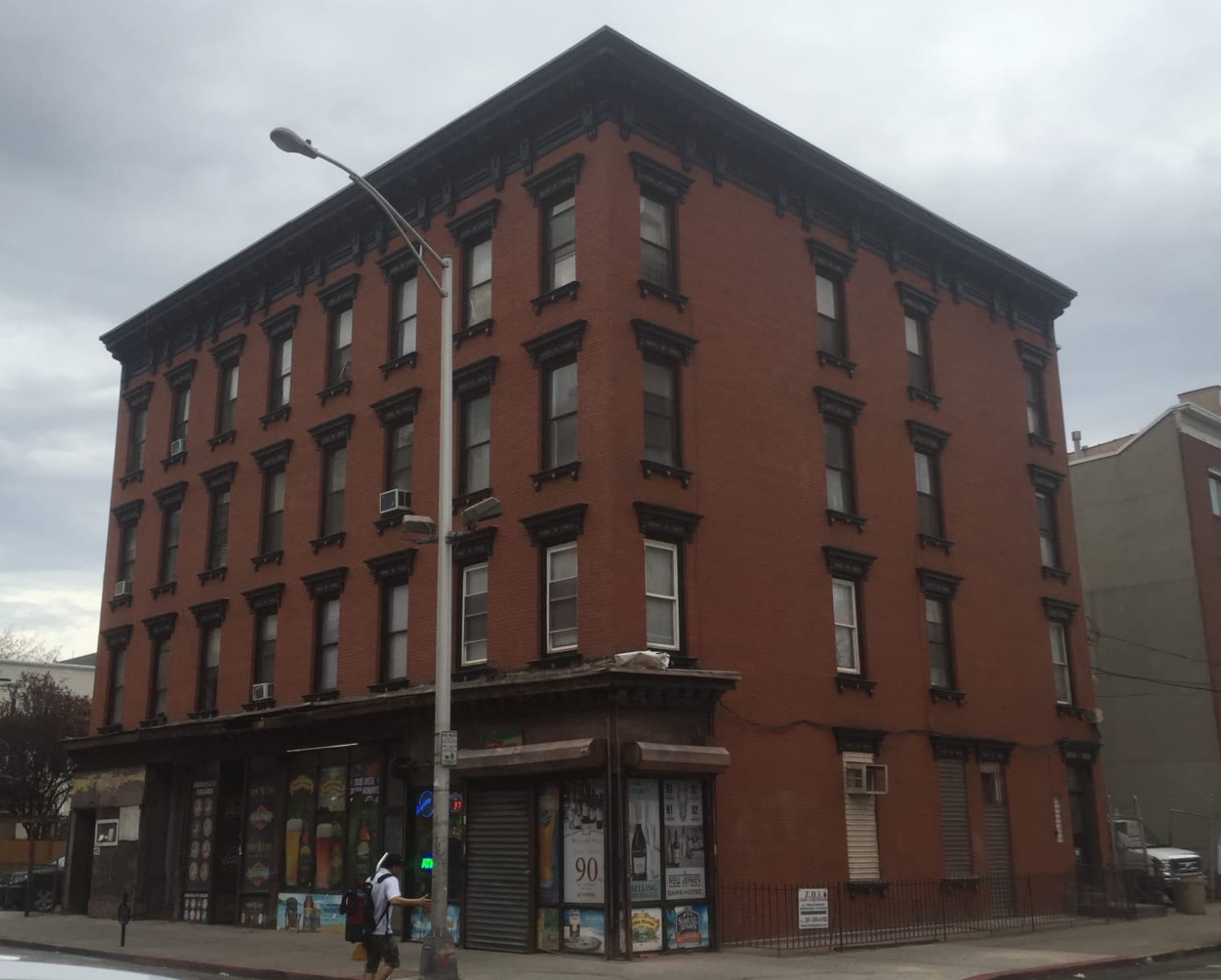
A parapet is the part of a wall that sticks up above the roof. On most older New York buildings it's a few feet of brick, capped with stone or terra cotta coping, sitting right over the sidewalk. It gets weather from both sides, nobody looks at it, and when it fails, bricks fall on people.
Since January 1, 2024, the city has required owners to have street-facing parapets looked at every year. The requirement comes from Local Law 126 of 2021, and DOB's rule spelling out how to do it is 1 RCNY 103-15. It's a much lighter obligation than the five-year Local Law 11 inspection. It also reaches far more buildings, because it applies at any height.
Which buildings it covers
The rule applies to every building with a parapet fronting a public right-of-way, which DOB defines broadly: a street, avenue, sidewalk, roadway or any other public place. Height doesn't matter. A three-story mixed-use building on a Staten Island commercial strip is covered just like a 20-story co-op on the Upper West Side.
There are two exemptions. Detached one- and two-family homes are out. So are buildings where a fence or other barrier keeps the public away from the exterior wall. If your parapet only faces a rear yard or an interior lot line, it isn't "fronting" a public way and the rule doesn't reach it, though it can still hurt someone.
For buildings of six stories or fewer, this annual check is often the only facade inspection the city requires, since those buildings fall outside FISP. That's a good reason to take it more seriously than the paperwork suggests.
Who can do the observation
DOB set the bar low on purpose. The rule says the observation has to be done by "a person competent to inspect parapets," and lists examples that include a bricklayer, mason, building superintendent, handyman, architect, engineer, a state-authorized building inspector or an inspector from an insurance company. Anyone else capable of identifying hazards on a parapet also qualifies.
So yes, your super can legally do it. Whether they should is a different question. A super will notice a missing brick. They're less likely to recognize a hairline horizontal crack at the roof line as the start of a parapet that's rotating outward, or to know that white staining under the coping means water is getting into the wall. There's also an awkward fact in the rule: the person who finds an unsafe condition has to report it to DOB immediately, which starts a 90-day repair clock and usually a sidewalk shed. Someone who works for the building every day has reasons to see things optimistically.
Our view is that a super or handyman is fine for a parapet that was rebuilt recently and has a clean history. For anything older, or any parapet that's been patched more than once, have a mason or an engineer do it at least every other year.
What the observation has to include
The rule requires a close-up look at the entire parapet, not a glance from across the street. It can be done from the roof or from a fire escape. At a minimum it has to answer these questions:
- Is it plumb? The parapet can't lean more than one-eighth of its own thickness at any point. For a typical 12-inch brick parapet, that's 1½ inches. For an 8-inch parapet, it's 1 inch. A level and a tape measure will tell you.
- Is there excessive deterioration? The rule names displacement, horizontal or diagonal cracks, missing or loose brick or coping stones, deteriorated mortar joints, spalling and rot.
- Are the attachments stable? That includes antennas and other telecom equipment, railings, roof access rails, gooseneck ladders, fire escape handrail attachments and signs.
That's the legal minimum. In practice, the problems we find when we open up parapets usually start in a few places the checklist doesn't name.
Look at the roof side, not just the street side. The back of the parapet is often in worse shape, because roofers have tarred over it, trapped moisture in the brick and let it freeze. Check the joints between coping stones. If the sealant or mortar there has failed, water runs straight down into the core of the wall every time it rains. Look for rust staining around railing posts and anchors, since corroding steel expands and cracks the masonry around it. And pay attention to plants. A weed growing out of a mortar joint three feet above the roof means that joint has been open for a long time.
What goes in the report
The report stays with the owner. It isn't filed with DOB. But it has to contain specific information, and it has to be kept for at least six years and produced if DOB asks for it. Under the rule, it needs:
- The building's address, including any associated addresses
- The owner's name, mailing address and phone number (or, for a corporation or LLC, the same details for a principal, with their title)
- The name of the person who did the observation, and if that isn't the owner, their contact details, business name and relationship to the building
- The date or dates of the observation
- A location plan showing which parapets were observed
- How the parapet is built, including material, height and thickness
- General conditions, whether anything unsafe was found, and what was done about it
- Any repairs made since the last report
- Dated photos showing conditions at the time of the observation
Take more photos than you think you need, and shoot the same spots from the same angles each year. Six years of consistent photos will show a crack getting wider or a parapet starting to lean long before anyone would notice by eye, and that record is worth more than any single report.
If DOB asks for the report and you can't produce it, the penalty runs from $1,250 to $10,000.
When to do it
The rule says annually. Most owners and managing agents treat that as once per calendar year, so if you haven't done a 2026 observation yet, you have until December 31.
For future years, we'd schedule it for March or April. Parapets take most of their damage in winter, when water in the brick freezes and expands. An observation in early spring catches that damage right after it happens, and it leaves the whole masonry season to fix what you find. An observation in December finds the same problems with no good weather left to repair them in.
If the observation finds something unsafe
This is where the rule gets strict. If the parapet shows a hazardous or unsafe condition, the person who did the observation must notify DOB immediately, by calling 311 and emailing parapets@buildings.nyc.gov. The owner must immediately put up public protection, such as a sidewalk shed, a fence or safety netting, and keep it there until the repair is done. The condition has to be corrected within 90 days of the notification to DOB.
Ninety days is tight for masonry, especially if the notice comes in the fall. Have a contractor lined up before the observation if you already suspect a problem. If a shed goes up, it falls under the city's newer shed rules, including short permit terms and penalties for missed milestones, which we explain in our sidewalk shed guide.
Repair or rebuild?
Minor problems (a few open joints, one loose coping stone, a railing post that needs re-anchoring) can usually be fixed in place in a day or two. Repointing the parapet and resetting the coping with new sealant and proper anchors keeps a sound parapet sound for years.
Once a parapet is out of plumb, or the brick is cracking through rather than just at the joints, patching stops being a good use of money. The wall has moved, and it'll keep moving. Rebuilding it gives you the chance to install through-wall flashing under the coping, stainless steel anchors and a proper connection to the roof. Those are the details most old parapets were built without, and they're why the old ones fail. On buildings that have repaired the same parapet two or three times, a rebuild is usually the cheaper choice over ten years. Our repair cost guide covers how access and unit prices add up on this kind of work.
How this fits with FISP
If your building is taller than six stories, it's also on the five-year FISP cycle, and your QEWI examines the parapets as part of that report. The annual observation still applies in every other year. Some engineers take the position that a FISP report can double as that year's parapet observation if it includes everything 1 RCNY 103-15 requires. That's reasonable, but confirm it with your QEWI rather than assuming it. It's easier to ask them to add a parapet section to the FISP visit than to send someone back to the roof in December.
For more on how the two programs overlap, see our Local Law 11 page.
Parapet repair from people who build them
NYC Superior Construction repairs and rebuilds parapets, coping and cornices on buildings of every height across New York City, Nassau, Westchester and Rockland counties, and Central and North New Jersey. If your observation turned something up, or you just want someone who works on parapets to look at yours before the report is due, send us your photos or last year's report and we'll tell you what we see.
Frequently asked questions
Which NYC buildings need an annual parapet observation?
Any building with a parapet facing a street, sidewalk or other public way, at any height. Detached one- and two-family homes are exempt, and so are buildings where a fence or barrier keeps the public away from the wall.
Who can perform the observation?
Anyone competent to inspect parapets. DOB lists masons, bricklayers, supers, handymen, architects, engineers, and state-authorized building and insurance inspectors as examples.
Do I file the parapet report with DOB?
No. You keep it for at least six years and produce it if DOB asks. Failing to produce it can mean a $1,250 to $10,000 penalty.
What happens if the parapet is unsafe?
The observer notifies DOB through 311 and parapets@buildings.nyc.gov, the owner installs public protection right away, and the condition has to be fixed within 90 days of the notification.
Does my FISP report count as the parapet observation?
It can in the year it's done, if it covers everything 1 RCNY 103-15 requires. Confirm with your QEWI. In the other four years of the cycle, you need a separate observation.
This article is general information about New York City building regulations, not legal or engineering advice. See DOB's rule, 1 RCNY 103-15, for the full requirements, and confirm current rules with the Department of Buildings. Last reviewed: September 22, 2026.