

We're a masonry contractor, so take this with that in mind. But we'd rather compete against contractors who were properly vetted than against a low number from someone who shouldn't be on your roof. Most of what goes wrong on facade jobs in New York can be traced back to the hiring decision, and most of it could have been caught with an afternoon of checking.
This guide is written for boards, managing agents and owners hiring for exterior masonry: repointing, brick and lintel work, parapets, chimneys and Local Law 11 repairs. The same checks apply whether the job is $15,000 or $1.5 million. The stakes just get higher.
Start with the right documents
The single best thing you can do for your bids is give every contractor the same thing to price. On a FISP job or any sizable repair, that means an engineer's or architect's drawings and specifications, with estimated quantities for each repair item. Without them, each contractor prices their own idea of the job, and the bids can't be compared.
On a small job without an engineer, write down the scope yourself as specifically as you can (which walls, which repairs, roughly how much) and give every bidder the same list.
Check the licenses and registrations
New York City has several layers of licensing, and a legitimate facade contractor should be able to show you the ones that apply to your job without hesitating.
DOB General Contractor registration. A contractor pulling Department of Buildings work permits must be registered with DOB as a General Contractor. For work on buildings four stories or taller, the registration also needs DOB's safety endorsement. You can look up any registration on DOB's website. Ours is 624276 N.
Home Improvement Contractor license. Work on a house or an individual apartment may also require a Home Improvement Contractor license from the city's Department of Consumer and Worker Protection. It's searchable online too.
Scaffold and shed permits and training. Sidewalk sheds and many scaffolds need their own DOB permits, filed by a licensed or registered party. Workers on suspended scaffolds need DOB-approved scaffold training, and on jobs that require a site safety plan, workers need Site Safety Training (SST) cards under Local Law 196, with longer supervisor training for foremen. Ask who will file the shed and scaffold permits and who will supervise the rigging.
Landmarks experience, if it applies. On a landmarked building or one in a historic district, ask for recent landmark jobs and whether LPC approved their test panels. Our post on LPC approval for facade work explains what the Commission expects.
Get the insurance right
This matters more in New York than almost anywhere else. Under New York's Labor Law Section 240, commonly called the Scaffold Law, owners and contractors can be held liable for many injuries involving falls from height, even when the owner did nothing wrong. Facade work is work at height by definition.
Before any work starts, get certificates of insurance showing general liability, workers' compensation and disability coverage, and make sure your building (and your managing agent, if applicable) is named as additional insured on the contractor's liability policy. Have your insurance broker or attorney review the certificates and the insurance requirements in the contract. Check the policy dates, and ask for updated certificates if the job runs past the renewal date.
A contractor who is slow to produce certificates, or whose certificates don't match the company name on the contract, should make you wary.
Look at their record
Much of a contractor's history in New York is public. Search DOB NOW and DOB's older BIS system for permits they've pulled; they should have a history of the kind of work you're hiring for. Check for violations issued on their job sites and for OATH (formerly ECB) hearing records. A few violations over years of work is normal in this industry. A pattern of safety violations, stop-work orders or unresolved penalties isn't.
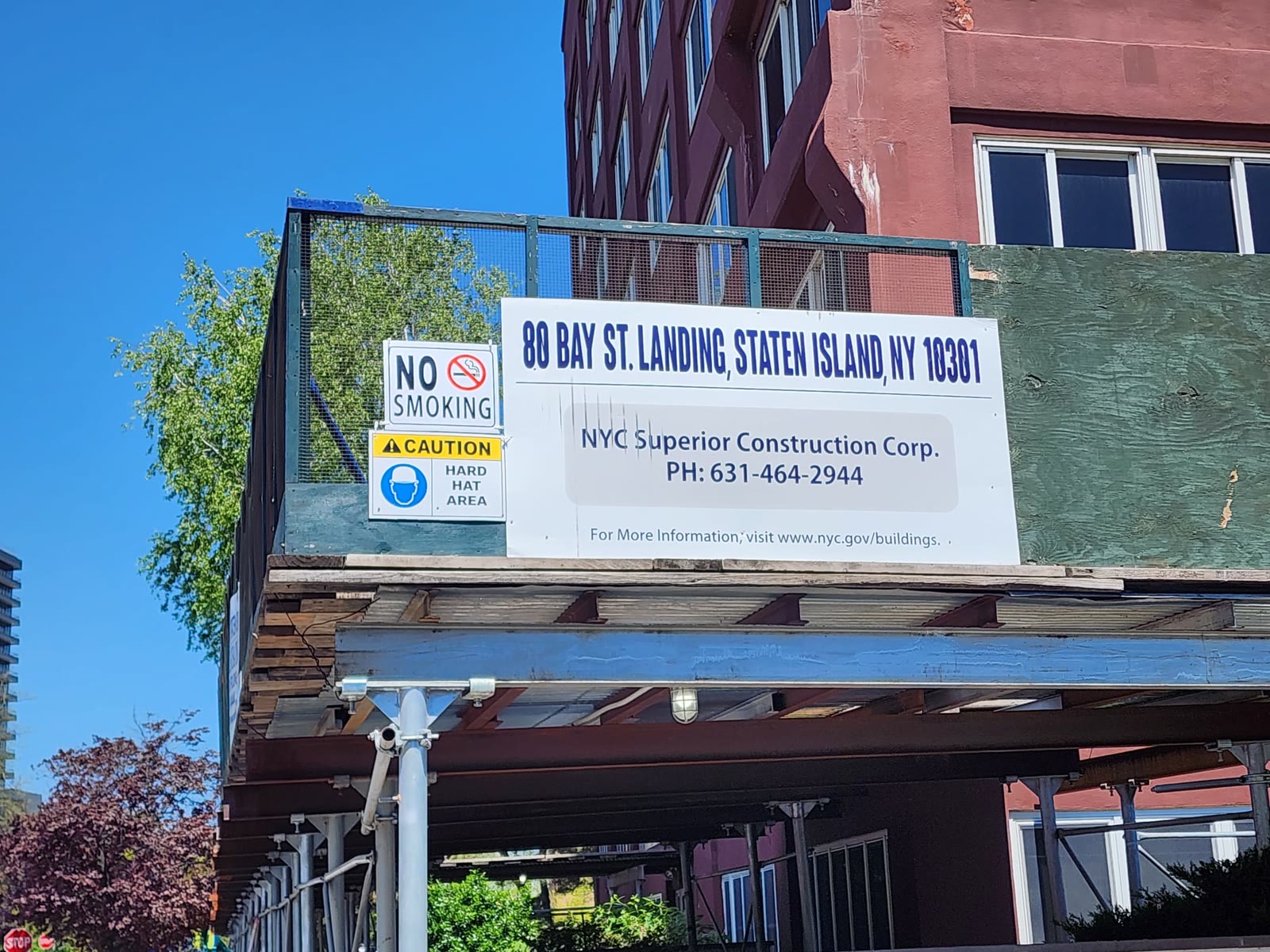
Then ask for references from buildings similar to yours in size and type, from the last two or three years, and call them. Ask the references whether the job finished on schedule, how change orders were handled, whether the site was kept clean and safe, and whether they'd hire the contractor again. Walk past one of the contractor's active job sites if you can. A clean, organized site with a properly posted shed and job signs says more than a brochure.
Compare bids properly
Once you have bids built on the same documents, compare what's actually in them.
Scope. Check that each bid includes the same repair items and excludes the same things. A low bid often turns out to exclude the shed, the permits, the engineer's inspections or protection of the neighbors' property.
Unit prices. On facade work, the real quantities of brick replacement and repointing aren't known until the scaffold is up. Compare the bids at the engineer's quantities and again at quantities 50 percent higher. A contractor with a low base price and high unit rates can end up the most expensive. Our Local Law 11 cost guide goes through this in detail.
Access and schedule. Ask each bidder how they'll reach the wall and how long they expect the job, and the shed, to last. Shed rent runs every month, and the city's shed laws now impose penalties for missed milestones, so a faster schedule can be worth paying for. Our sidewalk shed guide covers the rules.
Method. For repointing, ask how deep they'll rake, whether any joints will be done by hand, and what mortar they'll use. The answers separate careful contractors from fast ones. Our repointing guide explains what good answers sound like.
Read the contract
A proper contract for facade work should include the scope tied to the engineer's documents, unit prices for variable items, a schedule, insurance requirements, who pulls which permits, and how change orders are approved. Look at the payment schedule closely. Payments should follow completed work, not run ahead of it, and it's standard to hold back retainage, often 5 to 10 percent, until the work is finished and closed out. On a FISP job, closeout should include your engineer's sign-off and the amended filing. On a landmark job, it should include LPC's Notice of Compliance.
Be wary of large deposits before any work is done, especially on a small job.
Red flags
Some warning signs come up again and again. The contractor who knocks on your door because they "noticed some loose brick." The one who says a permit isn't needed for work that clearly needs one. The one who wants cash, or payment to a different name than the one on the contract. The one who recommends coating or sealing the whole facade as the fix. The bid that comes in far below everyone else's with no explanation. And the contractor who promises to start next week on a job that needs engineering, permits and a shed.
None of those automatically means fraud. Each of them is a reason to slow down and ask more questions.
What we'd want you to check about us
NYC Superior Construction has been doing masonry and facade work for more than 20 years, across New York City, Nassau, Westchester and Rockland counties, and Central and North New Jersey. Our DOB General Contractor ID is 624276 N. Look us up, ask for our insurance certificates and references, and visit one of our jobs. We work from your engineer's documents, price unit-rate items up front, and give boards a scope and schedule they can vote on. You can see finished work in our project portfolio and read what clients say on our reviews page.
Frequently asked questions
What license does a masonry contractor need in NYC?
A contractor pulling DOB permits must be a DOB-registered General Contractor, with a safety endorsement for buildings four stories or taller. Work on homes and apartments may also require a DCWP Home Improvement Contractor license. Sheds and scaffolds have their own permits and training requirements.
What insurance should they carry?
General liability, workers' compensation and disability, with your building named as additional insured. The Scaffold Law makes this especially important on facade work.
How do I check a contractor's record?
Search DOB NOW for their permits and violations, check OATH hearing records, call references from similar buildings, and visit an active job site.
Should I take the lowest bid?
Only if it prices the same scope, quantities and access as the others. Compare bids at the engineer's quantities and at higher quantities, since low base prices with high unit rates often cost more in the end.
This article is general information, not legal or insurance advice. Licensing and insurance requirements depend on the type of work and building. Have your attorney and insurance broker review contracts and certificates. Last reviewed: September 23, 2026.