
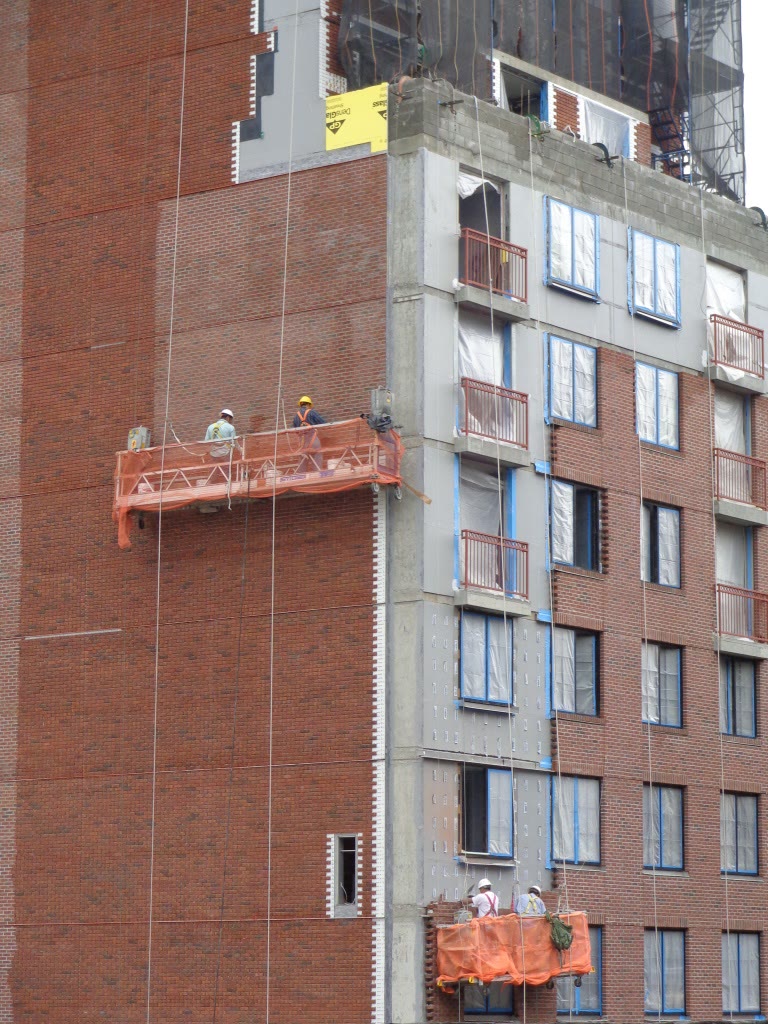
On a facade job, the masonry is usually the easy part. The hard part is the 60 or 200 households living a few feet from the work for several months, with crews outside their windows, grinders running at 8 a.m., netting over the view and a shed over the front door. When residents feel informed, they put up with a lot. When they feel surprised, every small problem turns into a call to the board president.
This guide is written for managing agents, boards and owners running a facade or Local Law 11 project in an occupied building. It covers what to tell residents and when, how apartment access works, what people complain about, and how to keep the job and the building on good terms.
Agree on the ground rules with your contractor first
Before the first notice goes out, settle a few things in the contract or at the pre-construction meeting. Residents will ask about all of them.
- Work hours. In New York City, construction is generally allowed on weekdays from 7 a.m. to 6 p.m. Work outside those hours needs an after-hours variance from DOB. Many buildings ask for noisy work, like grinding out mortar joints, to start at 8 or 9 a.m.
- Who talks to residents. One person from the managing agent's office and one from the contractor (usually the superintendent or project manager). Crews should be friendly but should send questions to those two people.
- Sequence. Which elevation goes first, roughly how long each drop or section takes, and when the crew will be outside each line of apartments.
- Apartment access. Which apartments the crew needs to enter (for lintel work from inside, window removal, or interior protection), and roughly when.
- Site rules. Where workers enter, which elevator they use and when, where materials are stored, and who cleans the lobby.
- Permit requirements. Work in an occupied multiple dwelling may come with a Tenant Protection Plan as part of the permit, covering things like egress, dust and noise. Ask your design professional whether one applies and make sure the contractor follows it.
The notice schedule
Notices work best in layers: a big-picture letter early, then shorter and more specific notices as the work gets closer to each apartment.
| When | Notice | What it should say |
|---|---|---|
| 4 to 6 weeks before | Project letter to every resident | Why the work is happening, the scope in plain terms, start date, expected duration, work hours, the shed, contact names. |
| 1 to 2 weeks before | Preparation notice | Which apartments must remove window AC units, plants, satellite dishes or terrace furniture, and by when. |
| About 1 week before | Schedule notice in the lobby and by email | Which elevation starts first and the order the work will move. |
| 2 to 3 days before | Apartment-specific notice | The crew will be outside your windows on the dates listed. Keep windows closed. Access needed or not. |
| Weekly | Progress update | Where the crew is now, where it moves next, anything that changed. |
| At completion | Close-out notice | Work finished, shed removal date, how to report anything missed. |
Post every notice in the lobby and elevators and send it by email or the building's portal. Translate it if a share of the building speaks another language at home. Date every notice, and keep copies. If there's ever a dispute about whether someone was told, the file answers it.
What to put in the first letter
A good project letter fits on one page. Something like this:
The building is required by New York City's Facade Inspection & Safety Program to repair parts of its exterior walls. Starting the week of May 4, NYC Superior Construction will repoint mortar joints, replace damaged brick and replace steel lintels over some windows on the front and east side of the building. Work hours are 8 a.m. to 5 p.m., Monday to Friday. The work is expected to take about four months. A sidewalk shed will cover the front entrance during the work, and the entrance will stay open. Crews will work from suspended scaffolds outside the windows. You'll receive a notice two to three days before work outside your apartment. Questions go to [name] at [phone and email].
Skip the engineering terms, or explain them in a few words. "Repointing" means nothing to most residents. "Replacing the worn mortar between the bricks" does.
Apartment access
Some facade work needs the crew inside apartments: replacing a lintel where the interior finish has to be opened, removing and reinstalling windows, protecting interiors where water might get in, or checking a leak. Access is where projects lose the most days, so plan it carefully.
Know the rules for your building. New York City housing rules generally require residents to give access for necessary repairs on reasonable notice, commonly at least a week ahead for repairs and 24 hours for inspections, except in emergencies. Rental leases, co-op proprietary leases and condo bylaws all have access clauses of their own. Your managing agent should confirm which apply before the notices go out.
Make it easy to say yes. Offer two or three time windows. Say exactly what the crew will do, how long it will take and how the room will be protected. Have the super or a building staff member present for every entry. Photograph the area before and after.
Track it. Keep a simple list of every apartment that needs access, the dates offered, the date confirmed and the outcome. When an apartment can't be reached after several attempts, the managing agent takes it from there with the building's attorney if needed. The contractor shouldn't be negotiating access on its own.
What residents complain about, and how to get ahead of it
Noise. Grinding out mortar joints is loud, and the sound carries through the structure. Tell residents in advance which days their line will be noisy, start grinding later in the morning, and let people who work from home know the schedule so they can plan around it.
Dust. Mortar dust gets through any open window or gap. Ask residents to keep windows closed while the crew is outside them, and have the contractor use dust controls such as vacuum-equipped grinders or misting. On older buildings, painted window trim and lintels may contain lead. Disturbing them requires lead-safe work practices, and in apartments where young children live, New York City's lead rules add requirements of their own. Raise it with your design professional before work starts.
Privacy. Workers outside a bedroom window at 8 a.m. is a reasonable thing to be unhappy about. The apartment-specific notice two to three days ahead lets people close blinds and plan. Crews should never look into apartments or photograph residents' interiors.
Light and views. Netting and scaffolding make apartments darker. There's no way around it, but residents take it better when they know how long it will last on their side of the building.
Water. Open mortar joints and removed lintels can let rain into the wall. A good contractor covers open work at the end of each day and before rain. Ask residents to report any new leak right away, and treat those reports as urgent.
Security. Pipe scaffolds and sheds can give someone a way up to lower-floor windows. Ask the contractor about anti-climb measures at the base of scaffolds, keep shed lighting working, and remind residents on lower floors to lock their windows.
Terraces and balconies. Residents may lose use of them for weeks. Tell them early, give a date range, and agree who moves furniture and planters.
Commercial tenants
Ground-floor retail tenants lose visibility under a shed and sometimes foot traffic. Talk to them before the shed goes up. Work out deliveries and trash pickup around the work, keep the shed well lit, and ask the contractor about putting the store's name on the shed, within what the shed permit allows. A store owner who hears about the shed from the crew installing it is far more likely to call a lawyer than one who heard about it a month earlier. Sheds also come up in lease renewals, which is one more reason to keep the job moving. Our sidewalk shed guide covers the current rules.
Handling complaints
Complaints will come. What matters is that they're answered.
- One point of contact. Residents should know exactly who to call or email. Complaints sent to five board members get answered by none of them.
- A written log. Date, apartment, the complaint, who handled it and how it was resolved. A shared spreadsheet is enough.
- Same-day handoff. Anything the contractor needs to act on (a leak, damage, a crew issue) goes to the contractor's super the same day.
- Answer every one. Even when the answer is that the work is on schedule and will move past their windows by Friday.
- Review the log weekly at the project meeting. Repeat complaints about the same thing usually point to something the crew can change.
For claims of damage, the before-and-after photos taken during apartment access and a pre-construction survey of the building's exterior and common areas settle most questions quickly.
Residents who need extra attention
Ask residents to let the managing agent know privately if someone in the apartment has a medical condition affected by dust or noise, uses oxygen or mobility equipment, works night shifts, or has young children at home. Building staff usually know who they are. A phone call before work reaches their windows, and some flexibility in the schedule for their line, costs very little.
When the job ends
Send the close-out notice, take down the shed promptly, and walk the building with the contractor to catch anything missed: paint splatter on windows, a loose AC bracket, mortar on a terrace. Invite residents to report anything they notice within a few weeks. Ending the job cleanly is what residents remember when the next facade cycle comes around.
For the schedule side of all this, see our posts on how long Local Law 11 repairs take and choosing a masonry contractor.
Working in occupied buildings is most of what we do
NYC Superior Construction has completed 34 facade projects in occupied co-ops, condos, rental buildings, schools and mixed-use properties across New York City, Nassau, Westchester and Rockland counties, and Central and North New Jersey. We give managing agents a schedule by elevation they can share with residents, give notice before we work outside each line of apartments, keep a superintendent on site as the point of contact, and clean up every day. Send us your report or scope and ask how we'd run the job in your building.
Frequently asked questions
How much notice do residents need before facade work starts?
A project letter four to six weeks ahead, a schedule notice a week ahead, and apartment-specific notices two to three days before work outside those windows. Entry into apartments has its own notice rules.
Can residents refuse to give access for facade repairs?
Generally no, after proper notice. Most access problems are solved by offering several time windows and explaining the work clearly.
What hours can facade work be done in NYC?
Generally weekdays 7 a.m. to 6 p.m. Evening and weekend work needs an after-hours variance from DOB.
Do window air conditioners have to come out during facade work?
Often, where the scaffold or the work passes that window. Get the list of affected units early and agree on who removes and reinstalls them.
How should a board handle complaints during facade work?
One point of contact, a written log, same-day handoff to the contractor's super, and a reply to every complaint.
This article is general information, not legal advice. Notice and access rules depend on the building type, the lease or proprietary lease, and the permit. Confirm requirements with your managing agent, attorney or design professional. Last reviewed: October 4, 2026.