

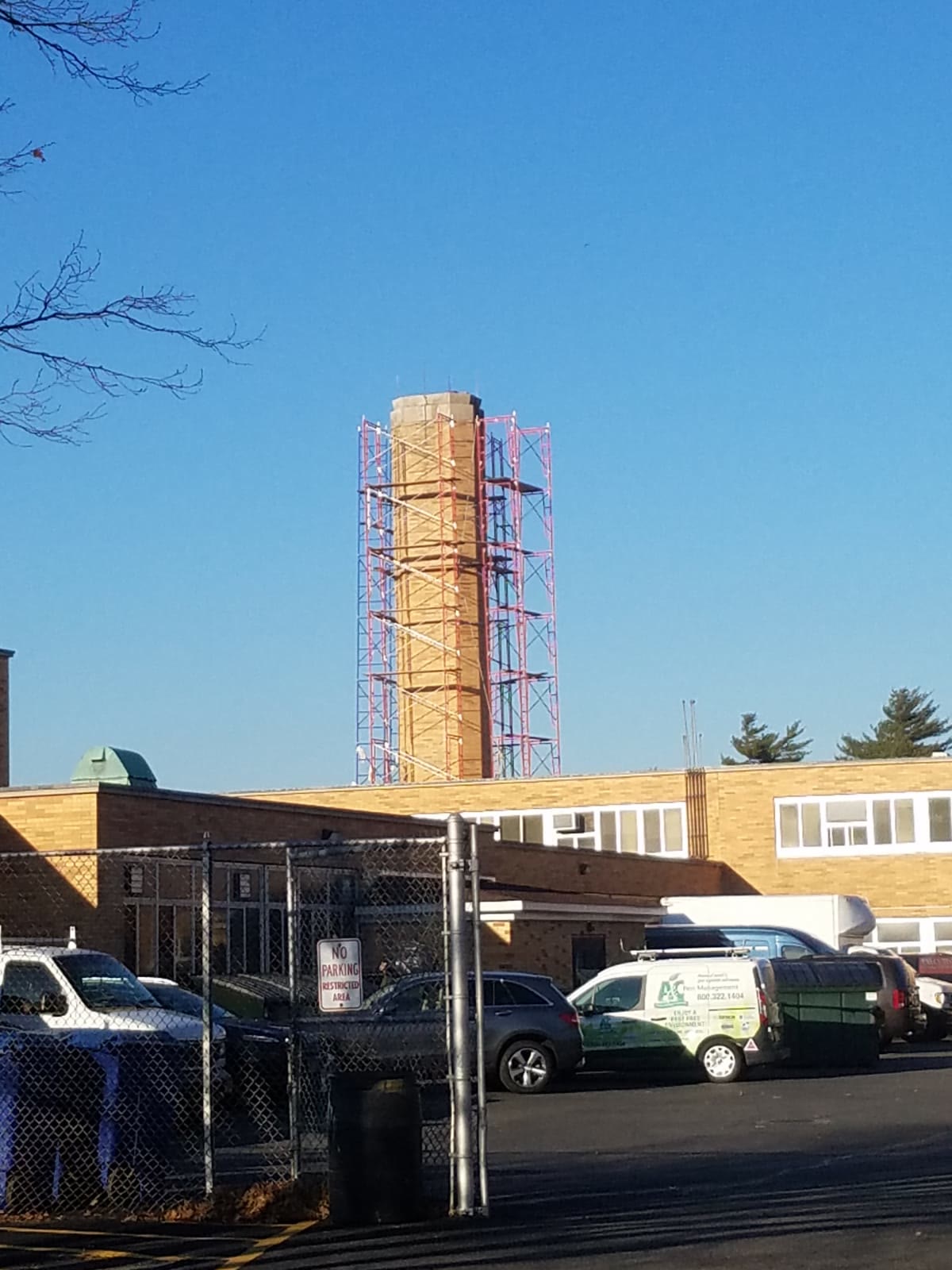
When a chimney comes down in a storm or a section of brick cracks open, one of the first questions homeowners ask us is whether insurance will pay for it. The honest answer is that it depends less on what was damaged than on why. Homeowners policies are generally written to cover sudden, accidental events. Most masonry problems are slow ones: years of water, frost and wear. That difference decides most claims.
We're contractors, not insurance professionals, and every policy is different. What follows is how coverage commonly works in standard homeowners policies, so you know what to ask your agent and how to document a claim. Read your own policy, and talk to your agent or broker before you make decisions based on it.
The rule that decides most claims: sudden vs. gradual
Most homeowners policies cover the house against direct physical loss unless a cause is excluded. The exclusions are where masonry claims usually live or die. Standard policies commonly exclude:
- Wear and tear, deterioration and gradual damage.
- Settling, shrinking, cracking or bulging of walls, foundations, floors and paving.
- Earth movement, including earthquakes and sinking soil.
- Flood and surface water.
- Repeated seepage or leakage of water over a period of time.
- Neglect, and faulty workmanship or materials (though damage that results from them may sometimes be covered).
So a chimney that has been losing mortar for twenty years and finally drops brick on the roof is usually a maintenance problem in the insurer's eyes. A sound chimney knocked over by a 70 mph gust is usually a covered loss.
What's typically covered and what isn't
| Cause of damage | Typically |
|---|---|
| Wind or a storm knocks down or damages a chimney or wall | Often covered |
| Lightning strikes the chimney | Often covered |
| A tree or limb falls on the chimney or house | Often covered |
| A vehicle hits the house, steps or a wall | Often covered, or recoverable from the driver's insurer |
| A chimney fire cracks the liner or masonry | Often covered |
| Hail damages the cap, crown or flashing | Often covered |
| Mortar worn out, brick spalling from age and frost | Usually not covered (wear and deterioration) |
| Chimney leak from old flashing or a cracked crown | Usually not covered (wear, repeated seepage) |
| Walls or steps cracking from settlement | Usually not covered (settling, earth movement) |
| Earthquake damage | Not covered without an earthquake endorsement or policy |
| Flooding | Not covered without flood insurance |
Chimneys specifically
Storms and lightning. A chimney sticks up above the roof and catches wind and lightning. Damage from a specific storm or strike is the classic covered chimney loss, and so is damage to the roof and interior when the chimney falls.
Chimney fires. A fire inside the flue can crack the liner and the masonry around it. Fire is generally a covered peril, so the damage it causes usually is too. An insurer may look at whether the chimney was maintained, so annual inspections and cleaning records help.
Leaks. Most chimney leaks come from worn flashing, cracked crowns, missing caps or porous brick, which are wear and maintenance items. Policies also commonly exclude water damage from leaks that happened repeatedly over time. If a storm suddenly tears off the flashing or cap and rain gets in, the resulting interior damage may be covered. Our post on chimney leaks explains how to find the source.
Earthquakes. Chimneys are among the first things damaged in an earthquake, and earthquake damage is excluded from standard homeowners policies. After the magnitude 4.8 earthquake centered in New Jersey in April 2024, some owners in the region found that out. Earthquake coverage is available as an endorsement or separate policy. Ask your agent.
The resulting-damage question
Even when the cause of a problem isn't covered, some damage that results from it may be. A policy might exclude replacing worn-out flashing, for example, while covering certain sudden water damage it causes inside. Insurers and policies differ a lot on this, and it's one of the places where reading your policy, and sometimes getting advice from a broker or public adjuster, pays off.
Steps, walls and other structures
Front steps and walls attached to the house are generally treated as part of the dwelling. Detached structures, like a freestanding retaining wall, a garden wall or a detached garage, usually fall under a separate "other structures" limit, which is often a percentage of the dwelling limit. The same sudden-versus-gradual rule applies. Steps pulling away from a house because of settling are usually excluded. Our posts on front steps pulling away and cracked brick walls cover those repairs.
If falling masonry hurts someone
A brick or piece of coping that falls and injures a person or damages a car can trigger the liability part of your policy. Liability coverage often responds even when the masonry damage itself wouldn't be covered, but a pattern of ignored problems can affect how an insurer treats the claim and the policy going forward. If something has fallen, read our post on what to do in the first 24 hours, and call your insurer the same day.
Condos, co-ops and rental buildings
In a condo or co-op, the facade, chimneys and roof are usually the building's responsibility and are covered (or not) by the building's master policy, which has similar exclusions for wear and deterioration. Your own unit policy typically covers your interior and belongings. Facade repairs from age, including Local Law 11 work, are capital expenses, not insurance claims. Landlord policies on small rental buildings follow much the same rules as homeowners policies.
How to document a masonry claim
- Make it safe first. Keep people away from anything that could fall.
- Photograph and video everything before it's cleaned up: the damage, the area around it, the fallen pieces, and any related damage to the roof, interior or cars.
- Keep the fallen material. Broken brick and mortar can show whether the damage was sudden or long-standing.
- Write down what happened: the date, the time, the weather, and who saw it. Save weather reports for the day if a storm was involved.
- Prevent further damage. Most policies require you to make reasonable temporary repairs, like tarping a roof or covering an opening. Keep the receipts.
- Notify your insurer promptly. Late notice can complicate a claim.
- Hold off on permanent repairs until the adjuster has seen the damage, unless safety requires otherwise.
- Get a written assessment from a contractor describing the damage, the likely cause and the cost to repair.
What we will and won't do
We'll inspect the damage, photograph it, and give you a written description of what we found and what it will cost to repair. We'll describe the cause as we actually see it. If a chimney came down because of a storm, we'll say so. If the mortar had been failing for years, we'll say that too. Owners are sometimes told by other contractors that a report can be written to "get insurance to pay." That's insurance fraud, and the homeowner who files the claim carries the risk.
Whatever insurance does or doesn't cover, regular maintenance is the cheapest protection. Most masonry repairs that insurers won't pay for were small and inexpensive at some point. Our fall maintenance guide lists what to check before winter.
Have us document the damage
NYC Superior Construction inspects and repairs damaged chimneys, walls, steps and facades across New York City, Nassau, Westchester and Rockland counties, and Central and North New Jersey. If you've had a storm, a fallen tree or a chimney fire, we'll document the damage and give you a written scope and price for your claim. Send us photos and tell us what happened.
Frequently asked questions
Does homeowners insurance cover chimney damage?
Often for sudden damage like wind, lightning, a falling tree or a chimney fire. Usually not for wear, deterioration or settling.
Is a leaking chimney covered by insurance?
Usually not if it comes from worn flashing, crowns or mortar. Damage from a sudden storm opening may be covered.
Does insurance cover cracked brick walls or foundations?
Settling and earth movement are commonly excluded. Cracks from a covered event like a vehicle or tree impact may be covered.
Are earthquakes covered for chimney damage?
Not under a standard policy. It needs a separate earthquake endorsement or policy.
What should I do before filing a masonry insurance claim?
Make it safe, document everything before cleanup, keep fallen pieces, prevent further damage, notify your insurer promptly, and get a written assessment.
This article is general information, not insurance or legal advice. Coverage depends on your specific policy, its endorsements and exclusions, and the facts of each loss. Read your policy and talk to your insurance agent or broker about your situation. Last reviewed: October 4, 2026.