
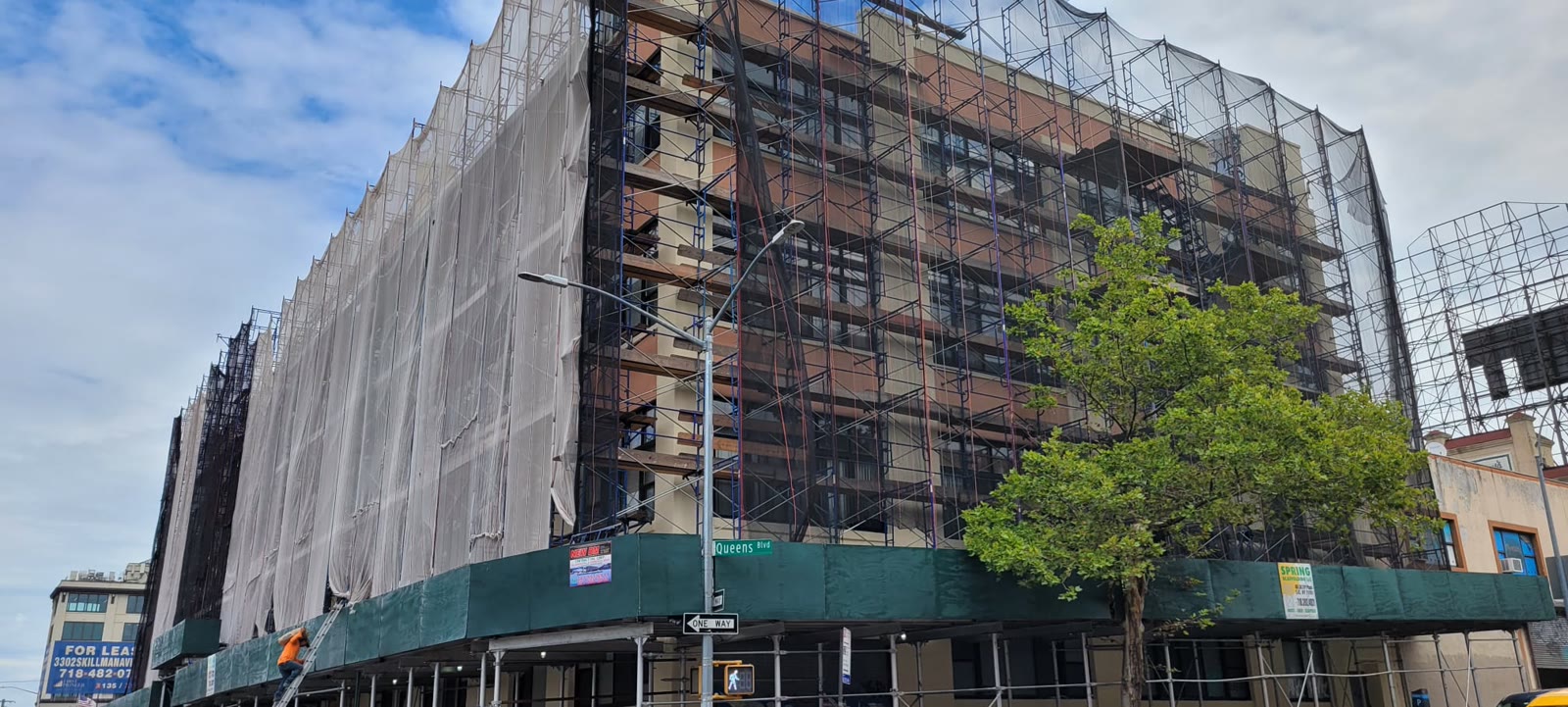
Most masonry damage in New York happens between December and March, and most of it starts months earlier. A joint that opens up in summer or a coping stone that shifts in a fall storm lets water into the wall. Then winter freezes it. By April the open joint has become loose brick, and the hairline crack has become a gap you can fit a finger in.
This is also the time of year when that can still be prevented. From now until sometime in November, depending on the weather, there's a short window to fix the problems that let water in before the freezing starts.
What freezing water does to masonry
Brick, mortar and stone are all porous. In rain they soak up water the way a sponge does, just more slowly. Water expands by about 9 percent when it freezes. When the pores of the brick are nearly full, that expansion has nowhere to go, and the ice pushes on the material around it.
A single freeze rarely does visible harm. The damage comes from repetition. New York winters swing across the freezing point dozens of times, often thawing in the afternoon sun and freezing again overnight. Each cycle opens microscopic cracks a little further, and the wider cracks hold more water for the next freeze. Eventually the outer face of the brick lets go. That's spalling, and it's the most common form of freeze-thaw damage you'll see on older buildings.
The same thing happens in mortar, which erodes and cracks, and in existing cracks, where ice acts like a wedge and pushes them wider every winter. Brownstone and other layered stones delaminate as water freezes between the layers, which we covered in our brownstone restoration post.
What makes it worse
How much damage a wall takes depends mostly on how wet it gets and how long it stays wet.
Horizontal surfaces are the worst. Rain and snow sit on the tops of parapets, chimneys, sills, cornices and ledges instead of running off, and the masonry underneath stays saturated for days. Areas under leaking gutters, overflowing downspouts and failed window sealant stay wet far longer than the rest of the wall.
Old, soft brick absorbs more water than modern brick, and some older brick was underfired and never very durable to begin with. A hard, cement-rich mortar used to repoint soft brick makes things worse, because the joints no longer absorb and release water or movement the way they should, and the brick takes the stress instead. Our repointing guide explains why mortar should be softer than the brick.
Sealers and coatings can make it worse too. When water gets in behind a coating through a crack or joint, it can't dry out through the face of the brick, so the wall stays saturated going into a freeze. And de-icing salt adds its own damage. Salt solutions in the pores increase the pressure during freezing, and the salt left behind feeds efflorescence and subflorescence in the lower courses of brick.
Where to look
To find freeze-thaw damage on your building, start at the tops of things: parapets and their coping stones, chimney crowns, window sills and the top courses of brick under the roof line. Then look at the bottom of the wall, where snow sits against the brick and salt splashes up from the sidewalk. Spalled brick faces, eroded joints, crumbling mortar at the top of a chimney and cracks that look wider than they did last year all point to water getting in and freezing.
What to fix before winter, in order
You won't get everything done before it turns cold, so do the most important things first.
1. Anything loose that could fall. Loose brick, cracked coping stones, detached pieces of cornice and shifting stone trim get worse in winter, and ice can push them off entirely. If something is loose over a sidewalk or entrance, have it secured, taken down or protected now. On a street-facing parapet, that also puts you in the territory of the city's annual parapet rule, which requires public protection and a 90-day repair once an unsafe condition is reported.
2. The tops of walls. Water entering at the top of a wall runs down inside it and saturates everything below. Reset loose coping stones and reseal or repoint the joints between them. Repair cracked chimney crowns. Our chimney guide explains why the crown matters so much.
3. Gutters, leaders and roof drainage. Clear gutters and downspouts after the leaves come down, fix leaking joints, and make sure leaders discharge away from the wall. It's the cheapest item on this list and prevents a lot of damage.
4. Window sealant and sills. Cut out cracked, shrunken or missing sealant around windows and replace it. Most sealants also need dry conditions and temperatures above about 40°F to go in properly, so this is a fall job, not a winter one. Check that stone sills slope away from the building and aren't cracked through.
5. Open joints on the most exposed areas. If you can only repoint part of the building this fall, do the parapets, chimneys and top floors, then the elevations that take the most wind-driven rain. The rest can wait for spring.
6. A plan for snow and salt. Tell whoever clears the sidewalk not to pile salted snow against the building, and to use salt sparingly near the walls and stoop.
The weather deadline
Mortar needs temperatures above about 40°F to cure properly, and new work has to be protected from freezing while it gains strength. LPC's specification for masonry work on landmarked buildings is stricter, calling for 45°F or above for 72 hours from the start of work. In New York, that usually means exterior masonry season winds down in November. The last weeks can be unpredictable, so book the work as early as you can.
Masonry can be done in winter, but it means building heated enclosures around the work, usually a tarp-wrapped scaffold with heaters running, and it adds cost and slows everything down. For most buildings it isn't worth it. It makes sense when a hazard can't wait until spring, or when a deadline forces it.
If you're in FISP sub-cycle 10A
This is the deadline that can force it. Sub-cycle 10A reports, for tax blocks ending in 4, 5, 6 or 9, are due February 21, 2027. If your building has open SWARMP items from Cycle 9, any that aren't repaired before your inspector's close-up examination have to be filed as Unsafe, with a $2,000 penalty and a 90-day repair clock that will likely run through the coldest part of the year. Finishing smaller repairs in October and November can keep them off an Unsafe filing. For larger scopes, you'll have to choose between paying for winter enclosures and accepting the Unsafe classification. Our Cycle 10 guide walks through that decision, and our cost guide covers how access and scheduling affect the budget.
After winter
Walk the building again in March or April, once the worst of the freeze-thaw season has passed. Look for new spalling, loose brick and wider cracks, compare them to photos from the fall, and schedule repairs while you still have the whole warm season to do them. If your building has a street-facing parapet, that's also the best time for the annual parapet observation.
Get your repairs in before the cold
NYC Superior Construction repairs brick, stone, parapets and chimneys across New York City, Nassau, Westchester and Rockland counties, and Central and North New Jersey. If you've spotted loose masonry, open joints or cracked coping, send us photos now. We'll tell you what should be done before winter and what can wait until spring. See our masonry restoration page for the work we do.
Frequently asked questions
How does freeze-thaw damage brick?
Water in the pores of brick and mortar expands by about 9 percent when it freezes. Repeated over many cycles, that pressure breaks off brick faces, cracks mortar and widens existing cracks.
Can masonry be repaired in winter?
Yes, with heated enclosures, but it costs more. For most buildings it's better to finish priority repairs in the fall, secure anything loose and schedule the rest for spring.
What should I fix before winter?
Anything loose first, then the tops of walls (coping, parapets, chimney crowns), then gutters and downspouts, window sealant, and open joints on the most exposed areas.
Does de-icing salt damage brick?
Yes. It makes freeze-thaw damage worse and feeds efflorescence in the lower courses. Use it sparingly near walls and don't pile salted snow against the building.
This article is general information about masonry maintenance, not engineering advice. Anything loose over a public way should be secured promptly and reported as required. Last reviewed: September 22, 2026.