
A chimney is the hardest-working piece of masonry on most buildings. It sticks up above the roof with weather hitting all four sides, it heats up and cools down every time the boiler cycles, and on the inside it's exposed to flue gases that slowly attack the mortar. It's also the part of the building owners look at least. By the time a chimney problem shows up as a leak or a pile of brick on the roof, the repair is usually bigger than it needed to be.
Most chimneys need one of two things: targeted repairs to specific parts, or rebuilding from some point up. Which one yours needs depends mostly on how deep the mortar damage goes and whether the chimney has moved.
The parts that fail
It helps to know what you're looking at.
The crown is the cap of concrete or mortar across the top of the chimney, around the flue. Its job is to keep water out of the top of the brick. The flue liner is the clay tile or metal pipe inside that carries the exhaust. The flashing is the metal where the chimney passes through the roof. The cap is the metal cover over the flue opening that keeps out rain and birds. And the rest is the chimney body: brick and mortar, same as any wall, but far more exposed.
Warning signs
From the roof or a nearby window, look for mortar joints eroded back from the brick face, brick with its face popped off, and white staining on the brick. That staining can be ordinary efflorescence from water moving through the masonry, or a sign of the acid attack described below. Look for cracks in the crown, rust streaks running down from the cap or flashing, loose brick, and brick or mortar debris on the roof around the base.
Then look at the chimney from a distance and from two directions. A chimney that isn't straight, or that bows or twists toward the top, has moved.
Inside, water stains on ceilings or walls next to the chimney, damp or crumbling plaster on chimney breasts, and flakes of tile or mortar collecting at the bottom of the flue all point to problems up top. So do boiler or furnace technicians reporting poor draft.
Why chimneys deteriorate from the inside
This part surprises owners. When fuel burns, it produces water vapor along with sulfur and nitrogen compounds. In an older masonry chimney, especially an oversized or unlined one, that vapor cools on the way up, condenses on the flue walls and forms mild acids. Those acids soak into the mortar and react with it. Over years, the mortar weakens, swells and crumbles from the inside out.
The damage is often uneven, because one side of the chimney is colder or wetter than the others. The mortar on that side expands more, and the chimney starts to lean away from it. A chimney that leans is almost always a chimney with mortar that's failed well below the surface.
This problem often gets worse after a building switches boilers. Modern high-efficiency equipment runs cooler exhaust up the flue, which produces more condensation in an old masonry chimney that was sized for a much hotter, older system. Whenever you replace or convert a boiler, have the chimney and flue evaluated as part of the job. It's often required, and it's the right time to add a liner if the chimney needs one.
Repairs that don't require a rebuild
When the brick is sound and the chimney is straight, targeted repairs usually do the job.
Repointing. Joints that have worn back at the surface but are still firm underneath get raked out and repointed, just as on any brick wall. Our repointing guide covers how that should be done. Chimneys need it more often than the walls below them.
A new crown. Many chimneys have a thin, flat layer of mortar troweled across the top instead of a proper crown. It cracks within a few years and funnels water straight into the brick. A good crown is cast concrete, sloped to shed water, and extends past the face of the brick on all sides with a drip edge underneath so water falls clear of the chimney instead of running down it. On many chimneys, replacing the crown is the single most useful repair you can make.
Flashing. Failed flashing is one of the most common causes of leaks next to a chimney. It should be replaced as part of any chimney job that involves the roof, with the upper piece (counterflashing) set into a mortar joint cut into the brick, not just glued or caulked to the face.
Cap and liner. A cap keeps rain out of the flue. A liner protects the masonry from flue gases. If the old clay liner is cracked or missing, a new liner, often stainless steel, sized to the equipment it serves, stops the acid damage at its source.
Spot brick replacement. A few spalled or cracked bricks in an otherwise sound chimney can be cut out and replaced.
When to rebuild
Rebuilding makes sense when the chimney's structure, not just its surface, has failed. We'd recommend it when you see any of these:
- The chimney leans, bows or twists
- Mortar crumbles deep into the joints, so you can dig it out with a screwdriver or a finger
- Brick is loose or displaced across large areas
- Most of the brick faces have spalled
- Earlier repairs, such as coatings or patches, are failing across most of the chimney
A rebuild doesn't have to mean the whole chimney. The usual approach is to take the chimney down to the point where the brick and mortar are sound again, often at or just below the roofline, and rebuild from there with new brick, proper mortar, a new crown, a liner if needed and new flashing. On some chimneys the damage runs lower, down through an attic or top-floor wall, and the rebuild follows it.
Repointing a chimney that needs rebuilding is money spent twice. New mortar in the outer inch of a joint doesn't hold together a chimney whose mortar has failed all the way through. The chimney keeps leaning, and the repointing cracks along with it.
Chimneys you don't use anymore
Plenty of New York buildings have chimneys serving nothing: old fireplaces sealed decades ago, flues abandoned after a boiler moved. An unused chimney still takes on water and still deteriorates, but nobody's watching it. If a chimney is out of service for good, it may make more sense to take it down below the roofline and close the roof over it than to keep repairing it. That decision should involve an engineer and may need a DOB filing, and on a landmarked building LPC will have a say (see our post on LPC approval for facade work), but it's worth asking about before you pay to restore something you'll never use.
Institutional stacks
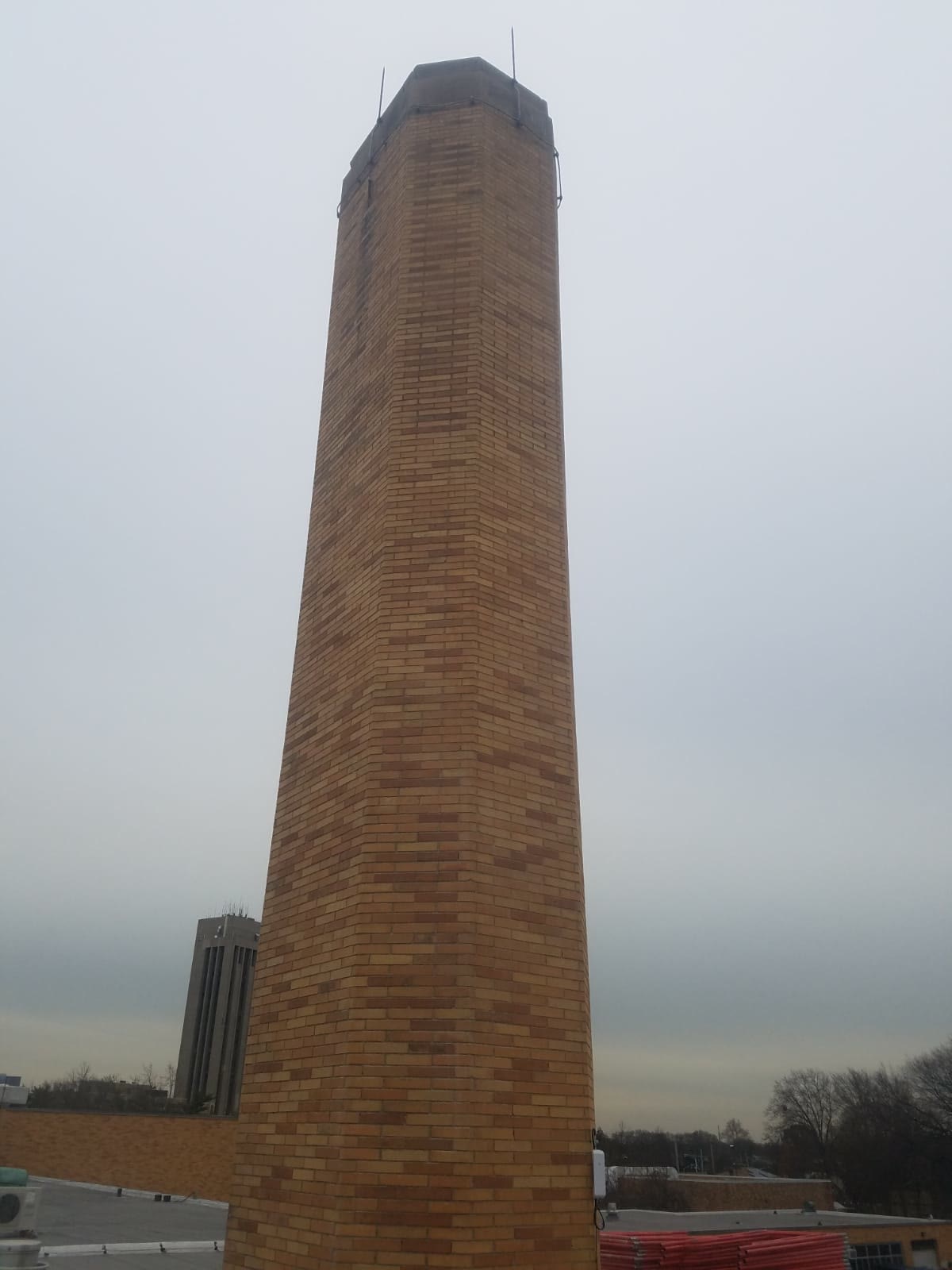
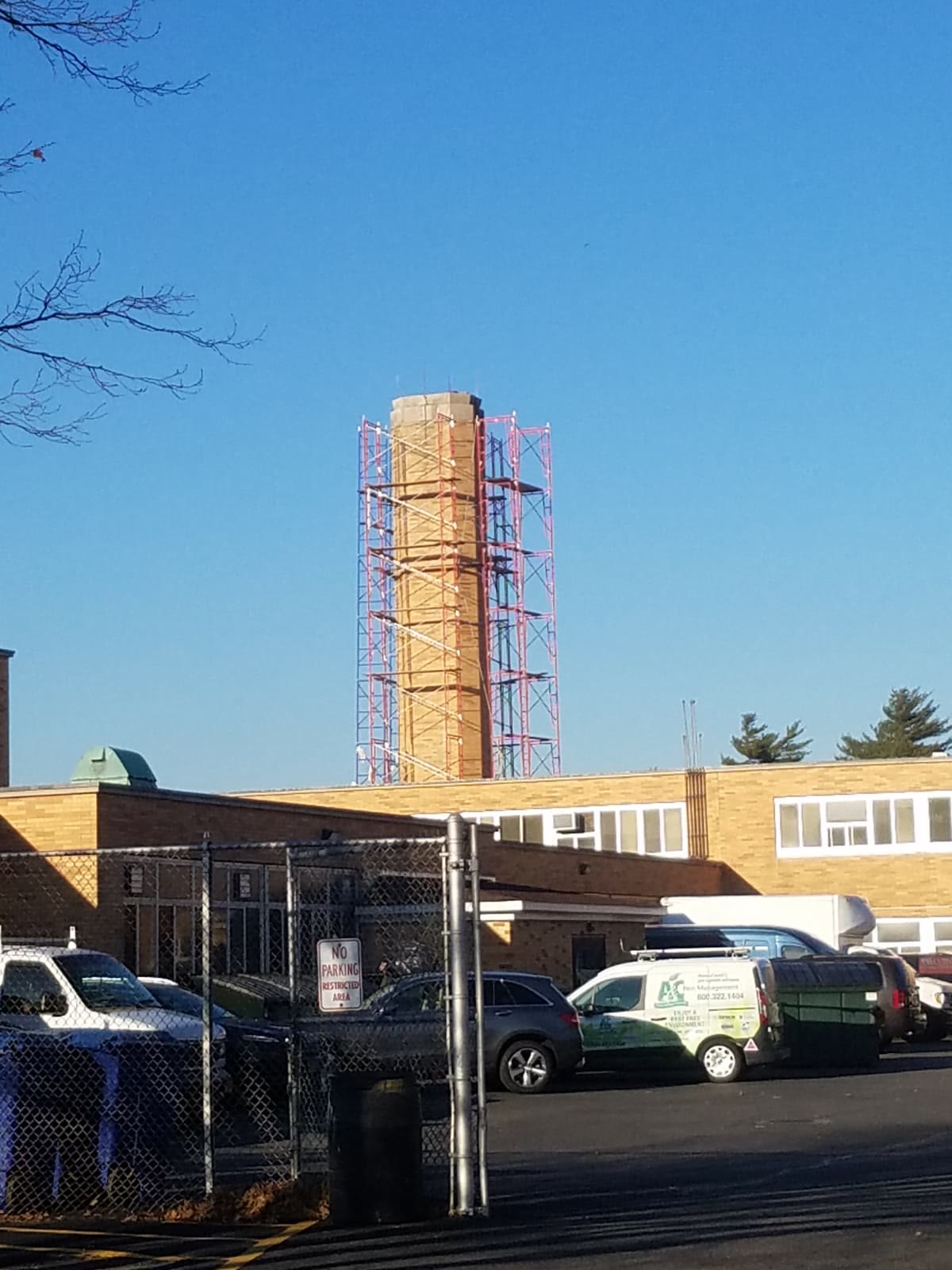
Schools, hospitals and older institutional buildings often have freestanding masonry smokestacks far taller than any rowhouse chimney. The same logic applies at a bigger scale. Stacks suffer the same acid attack and uneven mortar deterioration, and a stack that leans or sheds brick is a hazard to everyone below it. Access is the major cost, since a tall stack needs its own scaffold tower or suspended platform. Before restoring a stack that no longer serves active equipment, it's worth pricing a partial takedown as well.
When to schedule the work
Plan chimney work for late spring through early fall. Work on an active flue usually means shutting down the boiler or furnace it serves, which is a lot easier to arrange when nobody needs heat. Mortar also needs temperatures above about 40°F to cure properly. If you find a problem this fall, get the diagnosis and pricing done now and schedule the repair for the spring, and if anything is loose, have it secured or removed before winter so it can't fall.
Chimneys, parapets and inspections
A chimney that shares a wall with a street-facing parapet sits right in the area covered by the city's annual parapet observation. On buildings taller than six stories, rooftop masonry is also looked at during the five-year FISP inspection, and loose brick up there can end up in the report. If water is showing up inside near the chimney, our post on masonry leaks will help you trace it, and our guide to cracks in brick covers what different crack patterns mean.
Have us look at your chimney
NYC Superior Construction repairs and rebuilds chimneys, stacks, parapets and facades across New York City, Nassau, Westchester and Rockland counties, and Central and North New Jersey. Send us photos of the chimney from the roof and from the street, and tell us whether it's in use. We'll tell you whether it looks like a repair or a rebuild and what it would take. See our masonry restoration page and project portfolio for more of our work.
Frequently asked questions
How do I know if my chimney needs to be rebuilt?
If it leans, has loose or displaced brick, or has mortar that crumbles deep into the joints, it usually needs at least a partial rebuild. If the brick is sound and the mortar is only worn at the surface, repointing and a new crown are usually enough.
Why is my chimney leaning?
Usually because the mortar on one side has deteriorated more than the other, often from acidic condensation in the flue or uneven wetting. Have a leaning chimney assessed promptly.
What does a chimney crown do?
It caps the top of the chimney around the flue and keeps water out of the masonry. A cracked or flat crown is one of the most common causes of chimney damage.
When is the best time to repair a chimney?
Late spring through early fall, when the boiler can be shut down and it's warm enough for mortar to cure.
This article is general information about masonry repair, not engineering advice. Flue, liner and venting requirements depend on your equipment and on current codes, so involve a licensed professional for any work on an active flue. Last reviewed: September 22, 2026.