
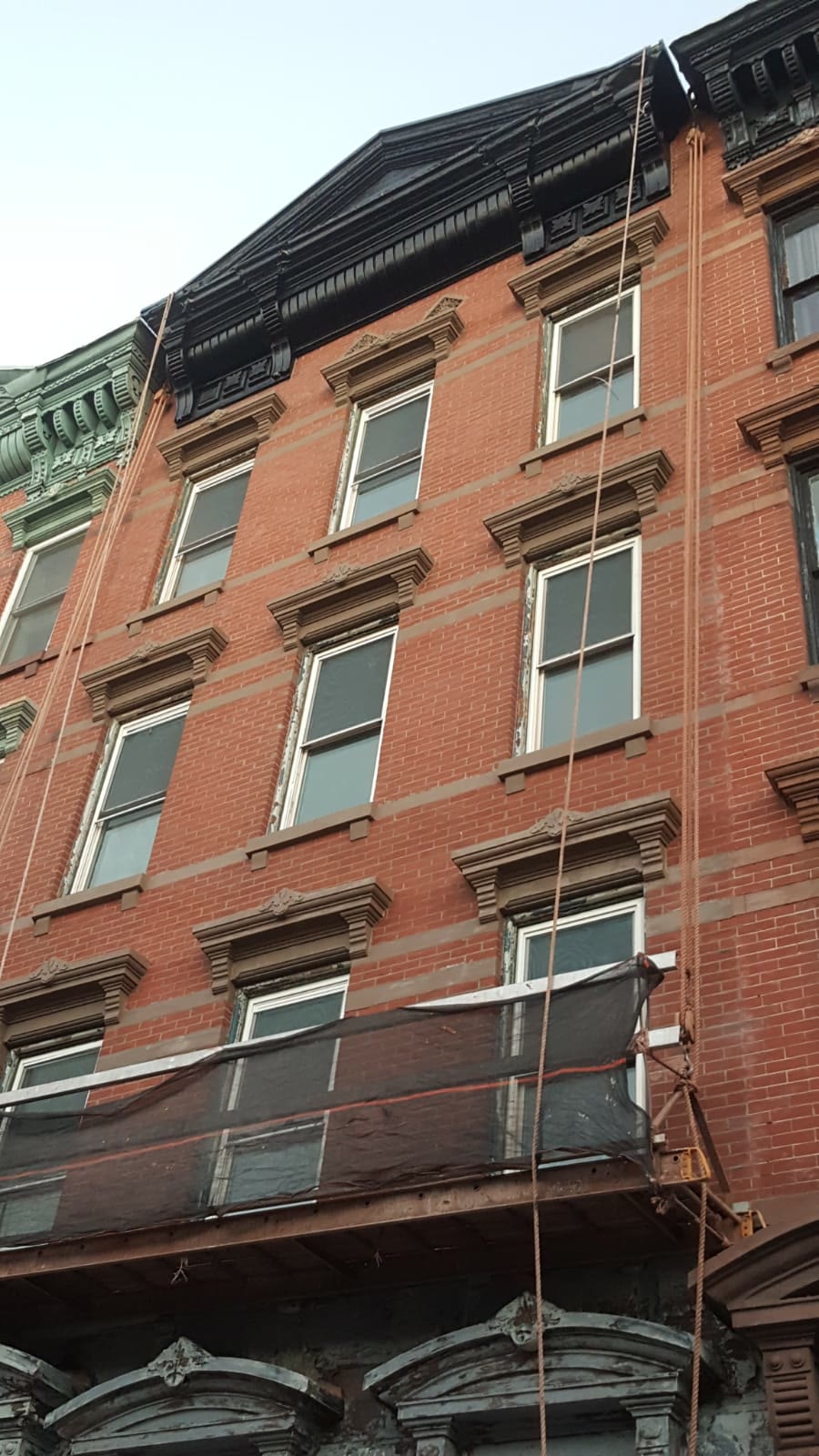
A piece of brick on the sidewalk is a warning. Whatever let it go is probably still up there, and the brick next to it may be next. The first day after a fall decides two things: whether anyone gets hurt, and whether the building ends up managing the problem or having the city manage it for you.
This is the plan we'd want a managing agent or board member to follow, hour by hour. It applies to a single loose brick as much as to a section of parapet, and to small buildings as well as FISP buildings.
The first hour: keep people away
Nothing else matters until the area under the wall is clear.
- Call 911 if anyone is hurt, if more material is visibly hanging, or if the fall was large. The fire department can close the sidewalk and look at the wall from a ladder or a tower.
- Block off the sidewalk below the wall, wider than you think you need. Material bounces and scatters. Use barricades, cones or caution tape, and put the super or a porter there to redirect people until it's secure.
- Close or reroute entrances under the affected wall: front doors, service entries, the garage, the rear yard. Post signs and tell the doorman.
- Move cars and anything else parked under the wall, if it's safe to approach.
- Don't send anyone up to look. Leaning out a window or walking the roof edge to inspect a failing wall is how a falling-brick incident becomes an injury. The inspection waits for people with the right equipment.
Hours 1 to 4: get professionals on site
Make two calls, and make them both now rather than one after the other.
A licensed engineer or architect. If your building is over six stories, call your Qualified Exterior Wall Inspector (QEWI), the professional who does your Local Law 11 inspections. If you don't have one, any New York-licensed engineer who does facade work can come out. They will look at where the brick came from, check the surrounding area, and decide how big the danger zone is and what has to happen to make the wall safe. On FISP buildings, a QEWI who finds an unsafe condition is required to notify DOB right away.
A facade contractor who does emergency work. The immediate job is public protection, usually a sidewalk shed, sometimes a fence and barricades for a short frontage, and sometimes netting or a scaffold if the danger is over a yard or roof. In New York, emergency protection and repair work can usually start before a permit is issued, as long as DOB is notified and the permit paperwork follows promptly. Your contractor and engineer handle those filings. Ask them directly who is filing what, and when.
While you wait, call the managing agent, the board president or the owner, so the people who can approve emergency spending know what's happening.
Hours 4 to 12: make the wall safe
Once the engineer has seen the wall, the contractor's crew can start what the industry calls make-safe work. Depending on what the engineer finds, that can include:
- Removing loose brick, stone or terra cotta by hand from a lift, scaffold or rope access, so nothing else falls.
- Installing netting over loose areas that can't be removed safely yet.
- Putting up the sidewalk shed or extending an existing one.
- Temporary shoring or bracing if a parapet, cornice or chimney has moved.
- Covering openings with plywood or plastic if the fall left holes for water to get in.
Make-safe work is not the repair. It removes the immediate danger so the real fix can be designed properly. Keep the two separate when you approve spending, and ask for the make-safe work in writing with a price before it starts if at all possible. A reputable contractor will give you a short written scope even in an emergency.
By the end of the day: notify and document
Take photos before anything is cleaned up. Photograph the fallen material where it landed, the spot on the wall it came from (from the ground, with a zoom lens if you have one), any damage to cars or property, and the barricades you put up. Write down the time of the fall, the weather, and who saw it. Keep the fallen pieces. An engineer can often tell from the back of a brick what failed behind it.
Notify your insurance carrier and broker the same day, especially if anything or anyone was hit. Owners are generally responsible for what falls off their facades. Coverage depends on the policy and the cause, and carriers want early notice.
Tell the residents and commercial tenants. A short notice under every door and in the lobby: what happened, which entrances are closed, which areas to avoid, and that an engineer and contractor are on it. People who hear nothing make their own assumptions, and some of them will call 311.
Expect DOB. A 311 complaint or a call from the fire department can bring a DOB inspector the same day or the next. If the sidewalk is protected and an engineer and contractor are already working, that visit tends to go much better. DOB can issue violations for failure to maintain the facade, and when owners don't act on a dangerous condition, the city can bring in its own contractor and bill the building for the work. You want to be well ahead of that.
A checklist you can print
| When | What to do |
|---|---|
| Immediately | Clear and block off the area below. Close entrances under the wall. Call 911 if anyone is hurt or more may fall. |
| Within the hour | Call the engineer or QEWI and a facade contractor. Notify the managing agent and board. |
| Within a few hours | Engineer inspects. Public protection goes up. Emergency filings with DOB are made. |
| Same day | Make-safe work removes or nets loose material. Openings are covered. |
| Before cleanup | Photos, notes, and the fallen pieces kept for the engineer. |
| Same day | Insurance carrier and broker notified. Residents and tenants told. |
| Within 24 hours | Written make-safe scope and price. Plan agreed for investigating the cause. |
What not to do
- Don't sweep it up and move on. One fallen brick almost always means others are loose.
- Don't let a handyman put it back. Something behind the brick failed. Mortaring the piece back in hides the evidence and leaves the cause in place.
- Don't caulk, coat or paint over the spot. It looks fixed from the street and fails the next winter.
- Don't take the barricades down until the engineer says the area is safe.
- Don't wait for the next board meeting to approve make-safe work. Most bylaws and management agreements allow emergency spending for exactly this.
Why the brick fell
After the emergency, the engineer's next job is finding the cause, because that is what the permanent repair has to fix. The usual suspects in New York buildings:
- Rusting steel. Lintels over windows and shelf angles at floor lines expand as they corrode, pushing the brick in front of them outward. Look for horizontal cracks at window heads or floor lines.
- Parapets. The top of the wall gets wet from both sides and freezes hardest. Leaning or cracked parapets and loose coping stones are among the most common sources of falling masonry. See our parapet inspection guide.
- Failed wall ties. On cavity walls, the metal ties that hold the outer layer of brick to the backup wall can rust through, leaving the face brick free-standing.
- Freeze-thaw and spalling. Water in the brick freezes, the face pops off, and pieces fall. Our posts on spalling brick and freeze-thaw damage explain both.
- Worn-out mortar. Once the joints have eroded deep enough, individual bricks, especially at corners and edges, can work loose. Our repointing guide covers the fix.
The permanent repair is designed from those findings, permitted, and then built, usually while the shed stays up. Our Local Law 11 repair timeline walks through how long that takes and how to keep the shed's time on the sidewalk short.
If your building is in FISP
A fall on a building taller than six stories almost always means the condition will be classified Unsafe. That brings a 90-day deadline to correct it (extensions are available from DOB), plus the sidewalk shed milestones under Local Law 51: construction documents within 5 months, a work permit application within 8 months and finished repairs within 2 years. Our sidewalk shed guide explains those milestones. If your last report listed SWARMP conditions near where the brick came from, have the engineer check whether they were the source.
Smaller buildings aren't in FISP, but the owner's duty to keep the facade safe is the same, and DOB can still issue violations and order protection. If the building has a parapet on a street or sidewalk, the annual Local Law 126 parapet observation applies regardless of height.
Call us if something just fell
NYC Superior Construction does public protection, make-safe work and the permanent masonry repairs that follow, across New York City, Nassau, Westchester and Rockland counties, and Central and North New Jersey. We work alongside your engineer, give you a written make-safe scope before we start, and file what needs filing. Call us, and send photos of the fallen material and the wall if you can.
Frequently asked questions
What should I do first if brick falls off my building?
Clear and block off the area below, call 911 if anyone is hurt or more may fall, then call an engineer and a facade contractor.
Do I have to report falling brick to the NYC Department of Buildings?
Protecting the public comes first. On FISP buildings the QEWI must notify DOB of unsafe conditions, and emergency work filings should be made promptly by your engineer or contractor.
Who pays if falling brick damages a car or injures someone?
Usually the owner is responsible. Notify your liability carrier the same day and document everything before cleanup.
Can a handyman just put the brick back?
No. Something behind the brick failed, and the wall around it may be loose too. Get an engineer to find the cause first.
Will DOB fine us for falling brick?
It can, and the city can do the work and bill you if you don't act. Moving quickly on protection and inspection helps a lot.
This article is general information, not legal, engineering or insurance advice. In any situation where someone is hurt or more material may fall, call 911 first. Confirm current DOB requirements with your design professional. Last reviewed: October 4, 2026.