

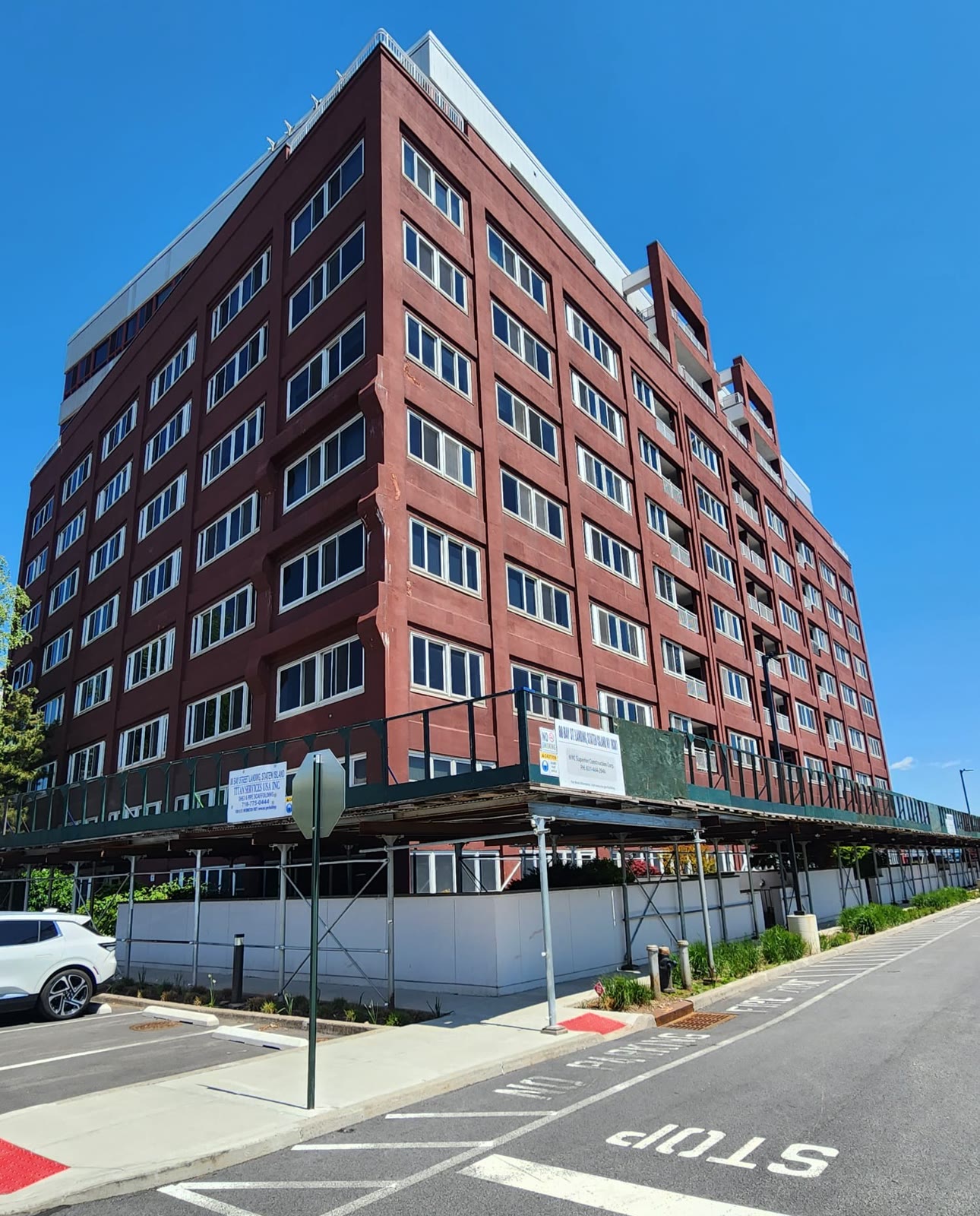
A brick building can look solid from across the street and still be carrying a six-figure facade bill. Masonry problems develop slowly, the expensive ones are often on walls a buyer never sees, and some of them come with city deadlines and penalties attached. Finding them before you close is how they become the seller's problem, or at least a number in the negotiation.
This checklist is for buyers of New York City brick buildings: walk-ups, mixed-use buildings, mid-rise apartment buildings and townhouses. One timing note first: in New York City, buyers usually do their inspections before the contract is signed, not after. Start early.
Step 1: Pull the public records
Before you walk the building, look it up. Much of its masonry history is on public record with the Department of Buildings, searchable by address on DOB NOW and the older Buildings Information System (BIS).
| What to check | What it tells you |
|---|---|
| FISP (Local Law 11) filings, for buildings over six stories | Whether reports were filed on time, and whether the last one was Safe, SWARMP or Unsafe. |
| Open DOB and ECB/OATH violations | Facade conditions an inspector has cited, and unpaid penalties. |
| Sidewalk shed permits | Whether a shed is up, when it went up, and whether it has been renewed again and again. |
| Open and recent work permits | Facade work started and never signed off, or recent repairs you'll want documents for. |
| Landmark status | Whether repairs will need Landmarks Preservation Commission approval, which affects cost and time. |
| HPD violations (residential buildings) | Leak and water damage complaints that can point to wall or roof problems. |
For buildings in FISP, the cycle matters. A building that was SWARMP in Cycle 9 and never repaired has to be filed as Unsafe in Cycle 10, with a penalty, a shed and a 90-day repair clock. If the building's Cycle 10 filing is coming up soon, you may be buying the inspection and its results. Our post on FISP Cycle 10 deadlines shows which sub-cycle a building is in.
Step 2: Ask the seller for documents
- Complete copies of every facade inspection report. The filing summary leaves things out. The full report lists each condition, its location and, for SWARMP items, the date the inspector expects it to become Unsafe.
- The annual Local Law 126 parapet observation reports for parapets facing a street or sidewalk, which owners must keep for six years.
- Engineer's reports, drawings and specifications for any past facade work.
- Contractor invoices, scopes and any warranties for repointing, lintels, parapets or roofing.
- The roof's age and warranty.
- Any open bids or proposals for facade work. Sellers often have a number they haven't shared.
- For co-ops and condos: pending or planned assessments, the reserve fund balance, and board minutes that mention the facade.
- Insurance claims for water damage or falling masonry.
A seller who can't produce facade reports for a FISP building, or produces only the first page, is telling you something.
Step 3: Look at the walls
Bring binoculars and walk every side of the building you can reach, including the rear yard, light wells and side walls next to vacant lots. Rear and side walls are usually in worse shape than the front because nobody looks at them.
- Cracks at the tops of windows. Horizontal cracks along the window head, or diagonal cracks climbing from the corners, usually mean rusting steel lintels. Each one is a repair item. Our lintel cost guide gives typical prices.
- Step cracks and vertical cracks. Some are minor. Wide, tapered or growing cracks need an engineer. Our guide to which cracks are structural explains the differences.
- Bulging or leaning walls. Sight along the wall from one corner. A bulge can mean failed wall ties or a wall separating from its backup.
- Spalled or missing brick, and brick faces popping off. See our spalling guide.
- Open mortar joints deep enough to fit a coin into. Widespread open joints mean repointing.
- Rust stains running down from window heads, floor lines or old anchors.
- White deposits (efflorescence), which mean water is moving through the wall. Our efflorescence post explains when it's a warning sign.
- Paint or coatings on the brick, which can trap moisture and hide damage.
- Fresh caulk, paint or patches over cracks. New work in odd places is worth asking about.
- Cornices, balconies and fire escapes. Look for rust, sagging, loose pieces and stained brick at the anchors.
Step 4: Go up to the roof
Parapets are among the most common sources of facade problems in the city, and the roof side is where you can see them best. Check whether the parapet is straight and plumb, whether the coping stones are loose, cracked or missing joints, and whether the brick on the inside face is cracked or crumbling. Look at how the roof membrane is flashed up the parapet. Check the chimney for leaning, open joints and a cracked crown. Our parapet repair cost guide and chimney guide explain what you're looking at.
Step 5: Look inside
The inside of the building shows where water is getting through the walls.
- Top-floor apartments and stairwells. Ceiling and wall stains near the exterior wall often point to the parapet or roof.
- Window heads and sills inside. Stains, peeling paint and soft plaster under windows point to lintels and flashing.
- Corner apartments, which take weather on two walls.
- The basement. Cracks in the foundation walls, water on the floor, efflorescence and crumbling mortar.
- Freshly painted patches on ceilings and walls next to the exterior.
Problems by building type
Prewar walk-ups and tenements. Steel lintels, parapets, cornices, chimneys and soft lime mortar that has been repointed badly with hard cement.
Postwar and mid-century buildings. Many have brick cavity walls tied to a concrete or block backup, with steel shelf angles at each floor. Watch for horizontal cracks at floor lines (rusting shelf angles), vertical cracks near corners (no expansion joints), and bulging brick (failed ties). Those repairs are usually more expensive than they look from the street.
Brownstones and townhouses. Delaminating brownstone, the stoop, the rear wall and the chimneys. Our posts on brownstone facades and stoop repair cover what those cost.
Red flags
- A sidewalk shed that has been up for years with no repair work underway. Under the 2025 shed laws, that can mean penalties are accruing. Our sidewalk shed guide explains them.
- SWARMP items whose projected Unsafe dates have already passed.
- An Unsafe filing with no amended report.
- Late or missing FISP filings and unpaid penalties.
- A whole facade coated or painted recently.
- A leaning parapet or a visibly bulging wall.
- A seller who won't let you onto the roof.
Step 6: Bring in the right people
On a house, a good home inspector will catch the obvious problems. On a multi-family or mixed-use building, or any building where the walls look suspect, hire an engineer or architect who does facade work to walk the building and review the records. On a larger purchase with serious concerns, it can be worth paying for a close-up look at the worst area from a lift or rope access.
Then get a facade contractor to walk the building with the engineer's notes and price the work. An engineer tells you what's wrong. A contractor tells you what it costs to fix, including access, which on taller buildings can be as large as the repairs themselves. Our Local Law 11 cost guide shows how those budgets come together.
Step 7: Use the number
A written scope and price for needed masonry work is a strong negotiating document. Depending on the deal, it can support a lower price, a seller credit, or money held in escrow at closing for the repairs. Lenders often have their own requirements for open violations and unsafe conditions, and condo and co-op lending questionnaires ask about facade conditions and pending assessments. Your attorney will know how to structure it. Our post on clearing DOB facade violations explains what it takes to close out open violations after you buy.
Get a repair price before you sign
NYC Superior Construction walks buildings for buyers and their engineers across New York City, Nassau, Westchester and Rockland counties, and Central and North New Jersey, and prices the masonry and facade work they find. We'll give you a written scope and budget range you can bring to your attorney and the negotiating table. Send us the address, the facade reports if you have them, and your timeline.
Frequently asked questions
What masonry problems should I look for before buying a brick building?
Cracks at window heads, step cracks, bulging walls or parapets, spalled brick, open joints, rust stains, coatings, and fresh patches over cracks. Check every wall, the roof and the basement.
How do I check a NYC building's facade inspection history?
Search the address in DOB NOW and BIS for FISP filings, classifications, violations, shed permits and open permits, then get the full reports from the seller.
Is a home inspection enough for masonry?
For a house it can catch the obvious. For larger buildings or visible problems, hire a facade engineer and get repairs priced.
Can I negotiate the price based on facade repairs?
Yes. A priced repair scope supports a price cut, credit or escrow. In NYC, do it before signing the contract.
Is a sidewalk shed a red flag when buying a building?
It's a reason to dig in: why it went up, how long it's been there, whether repairs are underway, and whether penalties are accruing.
This article is general information, not legal, engineering or real estate advice. Have your attorney, engineer and lender guide your due diligence, and confirm current DOB requirements before relying on any record. Last reviewed: October 4, 2026.