
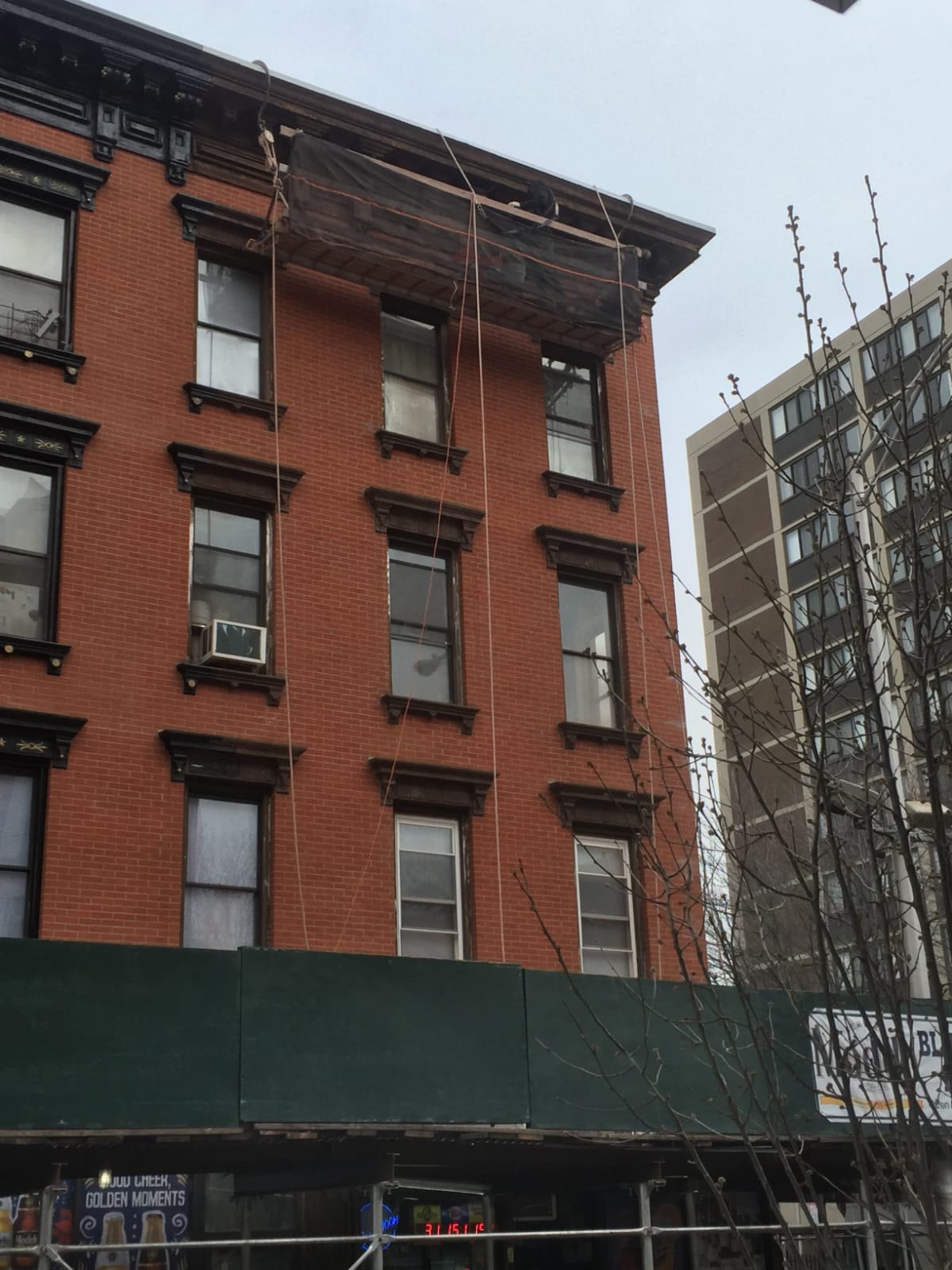
On a mixed-use building, the ground-floor retail often carries a large share of the rent roll, and it's the part of the building most exposed to what happens on the facade. A sidewalk shed in front of the store, netting over the sign, water dripping onto the entrance, rust stains running down the brick over the window: tenants notice all of it, and so do their customers. It shows up in renewals, in requests for concessions, and in how long a vacant storefront stays vacant.
This post is for owners of buildings with stores below and apartments or offices above. It covers how the facade affects retail income, the storefront masonry problems to watch, and how to plan repairs so they help your leasing instead of working against it.
How the facade costs you retail rent
Sidewalk sheds. The biggest one. A shed blocks the storefront from across the street, hides the sign, darkens the sidewalk and narrows it with posts. Stores under sheds lose walk-in traffic, and their owners say so to the landlord. New York City's 2025 shed laws, the "Get Sheds Down" package, were passed partly because long-standing sheds were hurting blocks and small businesses. Our sidewalk shed guide covers the new permit limits and penalties.
Scaffolding and netting. Less obstructive at street level than a shed, but netting over the sign band and upper storefront still makes the store look closed.
Leaks into the store. Water coming in at the storefront head or ceiling damages inventory and finishes and puts the landlord on the wrong side of the lease. It usually comes from the wall above: lintels, failed flashing, open joints or the cornice.
A worn facade. Stained, cracked or patched brick, a peeling cornice and rusted steel over the storefront make the space look cheaper than the block around it. Prospective tenants and their brokers price that in.
Liability and closures. Debris falling onto a store's customers, or a section of sidewalk closed off after a fall, can shut a store's entrance for days.
Storefront masonry problems to watch
The wall right above a storefront works hard. It spans a wide opening, it's often hidden behind signage, and any failure drips or falls straight onto the sidewalk.
- The beam over the storefront. A steel beam or lintel carries the wall over the opening. It's often hidden behind the sign band, and when it rusts, it pushes the brick above it out of line. Look for horizontal cracks and rust stains just above the sign.
- Piers. The brick or stone columns between storefronts carry the wall above. Vertical cracks, bulging and crumbling at the base, where salt and water collect, are common.
- Sign bands and cornices. Storefront cornices and old sign bands, often sheet metal or wood over masonry, rot and loosen.
- Old sign anchors. Holes and rusting brackets from decades of signs let water into the wall.
- Cast iron and ornament. On older buildings, especially in Manhattan, cast-iron storefronts and stone or terra cotta ornament need their own repairs.
Our lintel cost guide covers what steel replacement costs, and our post on water leaking through brick walls explains how to trace a leak to its source.
Run the numbers
Owners often weigh the cost of facade work against doing nothing. The comparison should include what the facade is already costing at street level. An illustration, for a building with two storefronts and a shed along a 50-foot frontage:
| Cost of a shed that stays up two years | Illustration |
|---|---|
| Shed rental and maintenance | Two years of monthly rent, plus permit renewals every 90 days |
| Concession to keep tenant A through renewal | $1,000 a month for 24 months: $24,000 |
| Tenant B leaves at renewal | Six months vacant at $9,000 a month: $54,000 |
| Re-leasing tenant B's space | Broker commission and a lower starting rent under the shed |
| City penalties if repairs stall | Shed milestone penalties of $5,000 to $20,000 each |
Your numbers will be different. The point is that the retail side of the building usually loses more from a shed that stays up than the repair schedule saves by moving slowly. Getting the work done and the shed down is often the best thing you can do for the ground floor.
Plan the work around your leases
Read the leases first. Before facade work starts, have your attorney review each retail lease for the landlord's exterior maintenance obligations, access rights, notice requirements, and any abatement or relief for obstructions or construction. Know what you owe before the tenant asks.
Talk to the tenants early. Tell them what's happening, why, and for how long, a month or more before the shed goes up. Work out deliveries, trash and the store's hours around the crews. A tenant who hears it from you first is far easier to deal with than one who hears it from the shed installer.
Design and fund before the shed goes up. Unless a condition is Unsafe, the shed doesn't need to go up until the work is ready to start. Have the repairs designed, priced, approved and permitted first, so the shed's time on the sidewalk is construction time.
Do the storefront elevation first. If the building has more than one wall to repair, sequence the street front first so the shed can come down while work continues on the rear and sides.
Staff the job properly. More crews and rigs on the front wall for a shorter period usually costs less overall than a long, thin schedule with shed rent running.
Schedule for warm weather. Masonry slows down or stops in the cold. A job planned for April through October has the best chance of finishing on time. Our post on facade repair timelines walks through scheduling.
Make the shed as easy on the store as possible. Good lighting under the shed (required, and worth exceeding), clean posts, a clear path to the door, and signage for the businesses on the shed within what the permit allows. Ask your contractor what's permitted. The 2025 laws also opened the door to alternatives such as netting in some situations, so ask your engineer whether anything other than a full shed would work.
Take it down promptly. When the condition is corrected, file the amended report or get the sign-off and get the shed removed. Every extra week costs shed rent and tenant goodwill.
Vacant storefront? Consider fixing the facade now
If a storefront is empty and the facade needs work in the next few years anyway, the vacancy is usually the cheapest time to do it. There's no tenant to disrupt or compensate, the shed doesn't block an operating business, and the space shows better to prospective tenants with a clean, repaired facade and no shed. A new storefront lintel, repaired piers, a restored cornice and clean brick change how brokers present the space.
Facade compliance on mixed-use buildings
Mixed-use buildings over six stories are in the Facade Inspection & Safety Program like any other. A SWARMP condition left alone becomes Unsafe at the next cycle, and an Unsafe condition means an immediate shed and a 90-day repair clock. Planning repairs on your schedule, before the inspector forces a shed onto your storefronts on the city's schedule, is the single best way to protect retail income. Our posts on SWARMP reports and FISP Cycle 10 cover the deadlines, and our post on managing residents during facade work covers the upper floors.
We work on occupied mixed-use buildings
NYC Superior Construction restores facades on mixed-use buildings across New York City, Nassau, Westchester and Rockland counties, and Central and North New Jersey. We plan the sequence around your storefronts, work the street elevation first when we can, and schedule to get the shed down as early as possible. Send us your facade report or a few photos of the storefront wall, and we'll give you a scope, a budget range and a schedule.
Frequently asked questions
Do sidewalk sheds hurt retail businesses?
Usually. They block visibility and signage, darken the sidewalk, and come up regularly in rent negotiations and renewals.
Can a retail tenant get a rent reduction because of a sidewalk shed?
It depends on the lease language. Review each lease with your attorney before the work starts.
How can I keep a sidewalk shed up for less time?
Design and fund the work before the shed goes up, do the storefront wall first, schedule for warm weather, and remove the shed promptly once corrected.
What facade problems are common above storefronts?
Rusting steel over the storefront opening, cracked piers, deteriorated cornices and sign bands, and leaks at the storefront head.
Is it worth restoring the facade before leasing a vacant storefront?
Often. A clean facade with no shed leases better, and doing it during the vacancy avoids disrupting a new tenant.
This article is general information, not legal, leasing or financial advice. The figures in the example are illustrations, not market data. Have your attorney review lease obligations and your design professional confirm protection and permit requirements. Last reviewed: October 4, 2026.